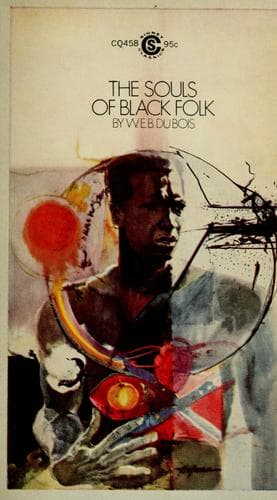
The Souls of Black FolkDu Bois, W. E. B. (William Edward Burghardt)
History
The Souls of Black Folk
Du Bois, W. E. B. (William Edward Burghardt)
African Americans
Easily the most striking thing in the history of the American Negro
since 1876 is the ascendancy of Mr. Booker T. Washington. It began at
the time when war memories and ideals were rapidly passing; a day of
astonishing commercial development was dawning; a sense of doubt and
hesitation overtook the freedmen’s sons,—then it was that his leading
began. Mr. Washington came, with a simple definite programme, at the
psychological moment when the nation was a little ashamed of having
bestowed so much sentiment on Negroes, and was concentrating its
energies on Dollars. His programme of industrial education,
conciliation of the South, and submission and silence as to civil and
political rights, was not wholly original; the Free Negroes from 1830
up to war-time had striven to build industrial schools, and the
American Missionary Association had from the first taught various
trades; and Price and others had sought a way of honorable alliance
with the best of the Southerners. But Mr. Washington first indissolubly
linked these things; he put enthusiasm, unlimited energy, and perfect
faith into his programme, and changed it from a by-path into a
veritable Way of Life. And the tale of the methods by which he did this
is a fascinating study of human life.
It startled the nation to hear a Negro advocating such a programme
after many decades of bitter complaint; it startled and won the
applause of the South, it interested and won the admiration of the
North; and after a confused murmur of protest, it silenced if it did
not convert the Negroes themselves.
To gain the sympathy and cooperation of the various elements comprising
the white South was Mr. Washington’s first task; and this, at the time
Tuskegee was founded, seemed, for a black man, well-nigh impossible.
And yet ten years later it was done in the word spoken at Atlanta: “In
all things purely social we can be as separate as the five fingers, and
yet one as the hand in all things essential to mutual progress.” This
“Atlanta Compromise” is by all odds the most notable thing in Mr.
Washington’s career. The South interpreted it in different ways: the
radicals received it as a complete surrender of the demand for civil
and political equality; the conservatives, as a generously conceived
working basis for mutual understanding. So both approved it, and to-day
its author is certainly the most distinguished Southerner since
Jefferson Davis, and the one with the largest personal following.
Public-domain text, read in full here on John Shaqi.
Reviews
Reviews
No reviews yet
Be the first to share your thoughts on this work.
Join the Discussion
Join the discussion
Sign in to leave a comment or review.
Sign InorCreate an account