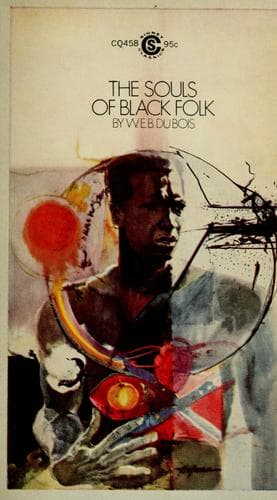
The Souls of Black FolkDu Bois, W. E. B. (William Edward Burghardt)
History
The Souls of Black Folk
Du Bois, W. E. B. (William Edward Burghardt)
African Americans
Third, higher education of Negro youth,—and concentrate all their
energies on industrial education, and accumulation of wealth, and the
conciliation of the South. This policy has been courageously and
insistently advocated for over fifteen years, and has been triumphant
for perhaps ten years. As a result of this tender of the palm-branch,
what has been the return? In these years there have occurred:
1. The disfranchisement of the Negro.
2. The legal creation of a distinct status of civil inferiority for the
Negro.
3. The steady withdrawal of aid from institutions for the higher
training of the Negro.
These movements are not, to be sure, direct results of Mr. Washington’s
teachings; but his propaganda has, without a shadow of doubt, helped
their speedier accomplishment. The question then comes: Is it possible,
and probable, that nine millions of men can make effective progress in
economic lines if they are deprived of political rights, made a servile
caste, and allowed only the most meagre chance for developing their
exceptional men? If history and reason give any distinct answer to
these questions, it is an emphatic _No_. And Mr. Washington thus faces
the triple paradox of his career:
1. He is striving nobly to make Negro artisans business men and
property-owners; but it is utterly impossible, under modern competitive
methods, for workingmen and property-owners to defend their rights and
exist without the right of suffrage.
2. He insists on thrift and self-respect, but at the same time counsels
a silent submission to civic inferiority such as is bound to sap the
manhood of any race in the long run.
3. He advocates common-school and industrial training, and depreciates
institutions of higher learning; but neither the Negro common-schools,
nor Tuskegee itself, could remain open a day were it not for teachers
trained in Negro colleges, or trained by their graduates.
This triple paradox in Mr. Washington’s position is the object of
criticism by two classes of colored Americans. One class is spiritually
descended from Toussaint the Savior, through Gabriel, Vesey, and
Turner, and they represent the attitude of revolt and revenge; they
hate the white South blindly and distrust the white race generally, and
so far as they agree on definite action, think that the Negro’s only
hope lies in emigration beyond the borders of the United States. And
yet, by the irony of fate, nothing has more effectually made this
programme seem hopeless than the recent course of the United States
toward weaker and darker peoples in the West Indies, Hawaii, and the
Philippines,—for where in the world may we go and be safe from lying
and brute force?
Public-domain text, read in full here on John Shaqi.
Reviews
Reviews
No reviews yet
Be the first to share your thoughts on this work.
Join the Discussion
Join the discussion
Sign in to leave a comment or review.
Sign InorCreate an account