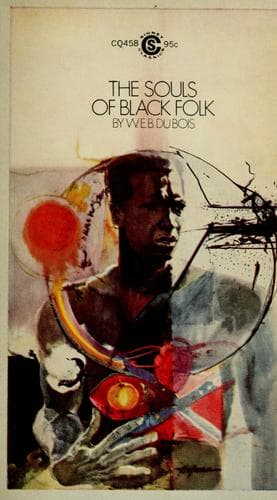
The Souls of Black FolkDu Bois, W. E. B. (William Edward Burghardt)
History
The Souls of Black Folk
Du Bois, W. E. B. (William Edward Burghardt)
African Americans
Atalanta is not the first or the last maiden whom greed of gold has led
to defile the temple of Love; and not maids alone, but men in the race
of life, sink from the high and generous ideals of youth to the
gambler’s code of the Bourse; and in all our Nation’s striving is not
the Gospel of Work befouled by the Gospel of Pay? So common is this
that one-half think it normal; so unquestioned, that we almost fear to
question if the end of racing is not gold, if the aim of man is not
rightly to be rich. And if this is the fault of America, how dire a
danger lies before a new land and a new city, lest Atlanta, stooping
for mere gold, shall find that gold accursed!
It was no maiden’s idle whim that started this hard racing; a fearful
wilderness lay about the feet of that city after the War,—feudalism,
poverty, the rise of the Third Estate, serfdom, the re-birth of Law and
Order, and above and between all, the Veil of Race. How heavy a journey
for weary feet! what wings must Atalanta have to flit over all this
hollow and hill, through sour wood and sullen water, and by the red
waste of sun-baked clay! How fleet must Atalanta be if she will not be
tempted by gold to profane the Sanctuary!
The Sanctuary of our fathers has, to be sure, few Gods,—some sneer,
“all too few.” There is the thrifty Mercury of New England, Pluto of
the North, and Ceres of the West; and there, too, is the half-forgotten
Apollo of the South, under whose aegis the maiden ran,—and as she ran
she forgot him, even as there in Boeotia Venus was forgot. She forgot
the old ideal of the Southern gentleman,—that new-world heir of the
grace and courtliness of patrician, knight, and noble; forgot his honor
with his foibles, his kindliness with his carelessness, and stooped to
apples of gold,—to men busier and sharper, thriftier and more
unscrupulous. Golden apples are beautiful—I remember the lawless days
of boyhood, when orchards in crimson and gold tempted me over fence and
field—and, too, the merchant who has dethroned the planter is no
despicable parvenu. Work and wealth are the mighty levers to lift this
old new land; thrift and toil and saving are the highways to new hopes
and new possibilities; and yet the warning is needed lest the wily
Hippomenes tempt Atalanta to thinking that golden apples are the goal
of racing, and not mere incidents by the way.
Public-domain text, read in full here on John Shaqi.
Reviews
Reviews
No reviews yet
Be the first to share your thoughts on this work.
Join the Discussion
Join the discussion
Sign in to leave a comment or review.
Sign InorCreate an account