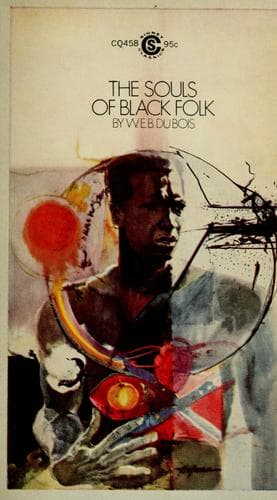
The Souls of Black FolkDu Bois, W. E. B. (William Edward Burghardt)
History
The Souls of Black Folk
Du Bois, W. E. B. (William Edward Burghardt)
African Americans
Atlanta must not lead the South to dream of material prosperity as the
touchstone of all success; already the fatal might of this idea is
beginning to spread; it is replacing the finer type of Southerner with
vulgar money-getters; it is burying the sweeter beauties of Southern
life beneath pretence and ostentation. For every social ill the panacea
of Wealth has been urged,—wealth to overthrow the remains of the slave
feudalism; wealth to raise the “cracker” Third Estate; wealth to employ
the black serfs, and the prospect of wealth to keep them working;
wealth as the end and aim of politics, and as the legal tender for law
and order; and, finally, instead of Truth, Beauty, and Goodness, wealth
as the ideal of the Public School.
Not only is this true in the world which Atlanta typifies, but it is
threatening to be true of a world beneath and beyond that world,—the
Black World beyond the Veil. Today it makes little difference to
Atlanta, to the South, what the Negro thinks or dreams or wills. In the
soul-life of the land he is to-day, and naturally will long remain,
unthought of, half forgotten; and yet when he does come to think and
will and do for himself,—and let no man dream that day will never
come,—then the part he plays will not be one of sudden learning, but
words and thoughts he has been taught to lisp in his race-childhood.
To-day the ferment of his striving toward self-realization is to the
strife of the white world like a wheel within a wheel: beyond the Veil
are smaller but like problems of ideals, of leaders and the led, of
serfdom, of poverty, of order and subordination, and, through all, the
Veil of Race. Few know of these problems, few who know notice them; and
yet there they are, awaiting student, artist, and seer,—a field for
somebody sometime to discover. Hither has the temptation of Hippomenes
penetrated; already in this smaller world, which now indirectly and
anon directly must influence the larger for good or ill, the habit is
forming of interpreting the world in dollars. The old leaders of Negro
opinion, in the little groups where there is a Negro social
consciousness, are being replaced by new; neither the black preacher
nor the black teacher leads as he did two decades ago. Into their
places are pushing the farmers and gardeners, the well-paid porters and
artisans, the business-men,—all those with property and money. And with
all this change, so curiously parallel to that of the Other-world, goes
too the same inevitable change in ideals. The South laments to-day the
slow, steady disappearance of a certain type of Negro,—the faithful,
courteous slave of other days, with his incorruptible honesty and
dignified humility. He is passing away just as surely as the old type
of Southern gentleman is passing, and from not dissimilar causes,—the
sudden transformation of a fair far-off ideal of Freedom into the hard
reality of bread-winning and the consequent deification of Bread.
Public-domain text, read in full here on John Shaqi.
Reviews
Reviews
No reviews yet
Be the first to share your thoughts on this work.
Join the Discussion
Join the discussion
Sign in to leave a comment or review.
Sign InorCreate an account