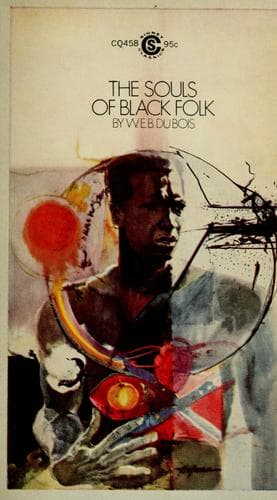
The Souls of Black FolkDu Bois, W. E. B. (William Edward Burghardt)
History
The Souls of Black Folk
Du Bois, W. E. B. (William Edward Burghardt)
African Americans
Up the new path the advance guard toiled, slowly, heavily, doggedly;
only those who have watched and guided the faltering feet, the misty
minds, the dull understandings, of the dark pupils of these schools
know how faithfully, how piteously, this people strove to learn. It was
weary work. The cold statistician wrote down the inches of progress
here and there, noted also where here and there a foot had slipped or
some one had fallen. To the tired climbers, the horizon was ever dark,
the mists were often cold, the Canaan was always dim and far away. If,
however, the vistas disclosed as yet no goal, no resting-place, little
but flattery and criticism, the journey at least gave leisure for
reflection and self-examination; it changed the child of Emancipation
to the youth with dawning self-consciousness, self-realization,
self-respect. In those sombre forests of his striving his own soul rose
before him, and he saw himself,—darkly as through a veil; and yet he
saw in himself some faint revelation of his power, of his mission. He
began to have a dim feeling that, to attain his place in the world, he
must be himself, and not another. For the first time he sought to
analyze the burden he bore upon his back, that dead-weight of social
degradation partially masked behind a half-named Negro problem. He felt
his poverty; without a cent, without a home, without land, tools, or
savings, he had entered into competition with rich, landed, skilled
neighbors. To be a poor man is hard, but to be a poor race in a land of
dollars is the very bottom of hardships. He felt the weight of his
ignorance,—not simply of letters, but of life, of business, of the
humanities; the accumulated sloth and shirking and awkwardness of
decades and centuries shackled his hands and feet. Nor was his burden
all poverty and ignorance. The red stain of bastardy, which two
centuries of systematic legal defilement of Negro women had stamped
upon his race, meant not only the loss of ancient African chastity, but
also the hereditary weight of a mass of corruption from white
adulterers, threatening almost the obliteration of the Negro home.
Public-domain text, read in full here on John Shaqi.
Reviews
Reviews
No reviews yet
Be the first to share your thoughts on this work.
Join the Discussion
Join the discussion
Sign in to leave a comment or review.
Sign InorCreate an account