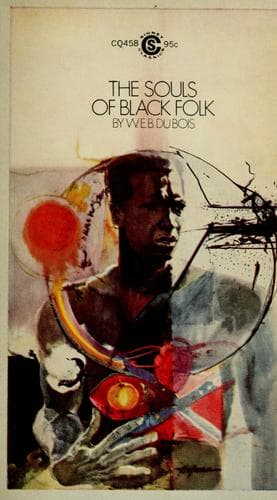
The Souls of Black FolkDu Bois, W. E. B. (William Edward Burghardt)
History
The Souls of Black Folk
Du Bois, W. E. B. (William Edward Burghardt)
African Americans
A people thus handicapped ought not to be asked to race with the world,
but rather allowed to give all its time and thought to its own social
problems. But alas! while sociologists gleefully count his bastards and
his prostitutes, the very soul of the toiling, sweating black man is
darkened by the shadow of a vast despair. Men call the shadow
prejudice, and learnedly explain it as the natural defence of culture
against barbarism, learning against ignorance, purity against crime,
the “higher” against the “lower” races. To which the Negro cries Amen!
and swears that to so much of this strange prejudice as is founded on
just homage to civilization, culture, righteousness, and progress, he
humbly bows and meekly does obeisance. But before that nameless
prejudice that leaps beyond all this he stands helpless, dismayed, and
well-nigh speechless; before that personal disrespect and mockery, the
ridicule and systematic humiliation, the distortion of fact and wanton
license of fancy, the cynical ignoring of the better and the boisterous
welcoming of the worse, the all-pervading desire to inculcate disdain
for everything black, from Toussaint to the devil,—before this there
rises a sickening despair that would disarm and discourage any nation
save that black host to whom “discouragement” is an unwritten word.
But the facing of so vast a prejudice could not but bring the
inevitable self-questioning, self-disparagement, and lowering of ideals
which ever accompany repression and breed in an atmosphere of contempt
and hate. Whisperings and portents came home upon the four winds: Lo!
we are diseased and dying, cried the dark hosts; we cannot write, our
voting is vain; what need of education, since we must always cook and
serve? And the Nation echoed and enforced this self-criticism, saying:
Be content to be servants, and nothing more; what need of higher
culture for half-men? Away with the black man’s ballot, by force or
fraud,—and behold the suicide of a race! Nevertheless, out of the evil
came something of good,—the more careful adjustment of education to
real life, the clearer perception of the Negroes’ social
responsibilities, and the sobering realization of the meaning of
progress.
Public-domain text, read in full here on John Shaqi.
Reviews
Reviews
No reviews yet
Be the first to share your thoughts on this work.
Join the Discussion
Join the discussion
Sign in to leave a comment or review.
Sign InorCreate an account