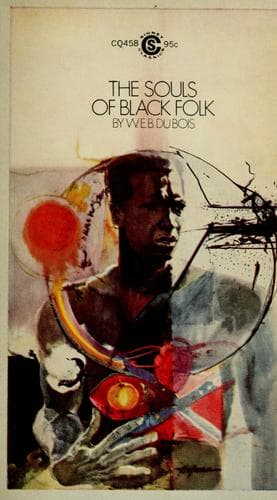
The Souls of Black FolkDu Bois, W. E. B. (William Edward Burghardt)
History
The Souls of Black Folk
Du Bois, W. E. B. (William Edward Burghardt)
African Americans
The Jew is the heir of the slave baron in Dougherty; and as we ride
westward, by wide stretching cornfields and stubby orchards of peach
and pear, we see on all sides within the circle of dark forest a Land
of Canaan. Here and there are tales of projects for money-getting, born
in the swift days of Reconstruction,—“improvement” companies, wine
companies, mills and factories; most failed, and the Jew fell heir. It
is a beautiful land, this Dougherty, west of the Flint. The forests are
wonderful, the solemn pines have disappeared, and this is the “Oakey
Woods,” with its wealth of hickories, beeches, oaks and palmettos. But
a pall of debt hangs over the beautiful land; the merchants are in debt
to the wholesalers, the planters are in debt to the merchants, the
tenants owe the planters, and laborers bow and bend beneath the burden
of it all. Here and there a man has raised his head above these murky
waters. We passed one fenced stock-farm with grass and grazing cattle,
that looked very home-like after endless corn and cotton. Here and
there are black free-holders: there is the gaunt dull-black Jackson,
with his hundred acres. “I says, ‘Look up! If you don’t look up you
can’t get up,’” remarks Jackson, philosophically. And he’s gotten up.
Dark Carter’s neat barns would do credit to New England. His master
helped him to get a start, but when the black man died last fall the
master’s sons immediately laid claim to the estate. “And them white
folks will get it, too,” said my yellow gossip.
I turn from these well-tended acres with a comfortable feeling that the
Negro is rising. Even then, however, the fields, as we proceed, begin
to redden and the trees disappear. Rows of old cabins appear filled
with renters and laborers,—cheerless, bare, and dirty, for the most
part, although here and there the very age and decay makes the scene
picturesque. A young black fellow greets us. He is twenty-two, and just
married. Until last year he had good luck renting; then cotton fell,
and the sheriff seized and sold all he had. So he moved here, where the
rent is higher, the land poorer, and the owner inflexible; he rents a
forty-dollar mule for twenty dollars a year. Poor lad!—a slave at
twenty-two. This plantation, owned now by a foreigner, was a part of
the famous Bolton estate. After the war it was for many years worked by
gangs of Negro convicts,—and black convicts then were even more
plentiful than now; it was a way of making Negroes work, and the
question of guilt was a minor one. Hard tales of cruelty and
mistreatment of the chained freemen are told, but the county
authorities were deaf until the free-labor market was nearly ruined by
wholesale migration. Then they took the convicts from the plantations,
but not until one of the fairest regions of the “Oakey Woods” had been
ruined and ravished into a red waste, out of which only a Yankee or an
immigrant could squeeze more blood from debt-cursed tenants.
Public-domain text, read in full here on John Shaqi.
Reviews
Reviews
No reviews yet
Be the first to share your thoughts on this work.
Elsewhere in the archive
Join the Discussion
Join the discussion
Sign in to leave a comment or review.
Sign InorCreate an account