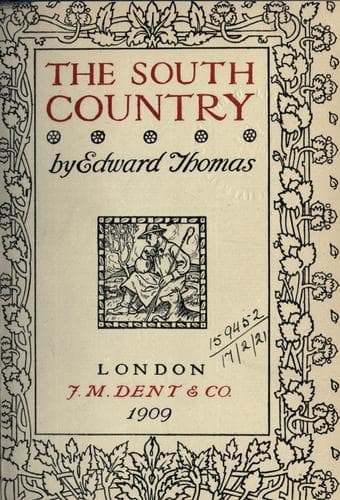
England -- Description and travel; Natural history -- England; Thomas, Edward, 1878-1917 -- Travel -- England
There are whole nights when the cuckoo will not sleep, and the woods
on either side of a road twenty miles long emit the cry of these
conquerors under the full moon and the white stars of love. If you
pause it will appear that it is not a silence that this song rules
over; for what was a silence was full of sounds, as many sounds as
there are leaves, sounds of creeping, gliding, pattering, rustling,
slow wormlike continuous noises and sudden sounds. And strangely at
length is the glorious day reared high upon the ruins of this night, of
which the survivors slink away into the old forgotten roads, the dense
woods, the chimneys of deserted houses.
It is a jolly note only when the bird is visible close at hand and
the power of his throat is felt. Often two or three will answer one
another, or for half a day will loiter about a coombe for the sake
of an echo. It is one of the richest sounds in nature when two sing
together, the second note of one being almost blended with the first
of the other; and so they continue as if themselves entranced by the
harmony, and the navvy leans upon his pick to listen.
* * * * *
On the day after the great melting of the snow the white beam tree,
at the edges of high woods and in the midst of the beeches, has its
hour, when its thousands of large white buds point upward like a
multitudinous candelabrum. For me the white beam is always associated
with wayfaring. Its white buds are the traveller’s joy of spring. The
buds like blossoms or flames bewitch from afar off. They are always
upon sloping ground and usually upon hillsides in the chalk land. In
the autumn their leaves often shrivel before falling, and turn to a
colour that looks like pink almond blossom by contrast with juniper and
yew. When they have fallen, they are as much to be noticed. They lie
commonly with their white undersides uppermost, and though rain soaks
them and wind scatters them and they are trodden down, they preserve
their whiteness until the winter or the following spring. It is a
tree that belongs, above all others except the yew, to the Pilgrims’
Way, and it is impossible to forget these leaves lying white on the
untouched wayside sward, among the dewy purple and crimson and gold of
other leaves, sparkling in the sun and entering into all the thoughts
and fancies and recollections that come to one who goes in solitude
along that old road when the scent of the dying year is pungent as
smoke and sweet as flowers.
KENT, SURREY AND HAMPSHIRE.
Public-domain text, read in full here on John Shaqi.
Reviews
Reviews
No reviews yet
Be the first to share your thoughts on this work.
Join the Discussion
Join the discussion
Sign in to leave a comment or review.
Sign InorCreate an account