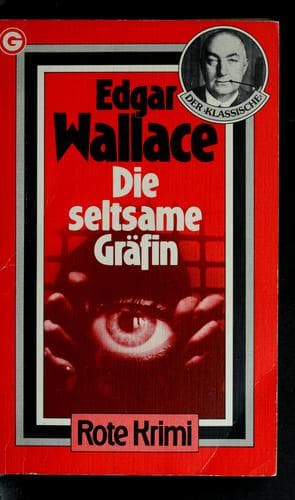
Countesses -- Fiction; Crime -- Fiction; Detective and mystery stories; Household employees -- Fiction; Young women -- Fiction
The girl heaved a sigh.
“I’m sorry I asked,” she said, as she walked by the governor’s side
through the grille to his office.
“Other people have asked that,” said the governor, “and haven’t been
satisfied. It is against the prison rules to identify any convict, as
you know. But, curiously enough----” He was looking round for
something, and presently he found it, a stout calf-bound book that had
been opened and laid face downwards on a filing cabinet.
Without a word he handed it to her, and she looked at the title. She
was sufficiently acquainted with law books to recognise it as one of
that variety. It was labelled _Fawley’s Criminal Cases_.
“Mary Pinder,” he said briefly, and she saw that the book was open at
the page which was headed by that name. “It is rather curious, I was
reading up the case just before you came in. I was looking up the
essential details to see whether my memory was at fault. I don’t mind
telling you”--he dropped his voice as though in fear of an
eavesdropper--“that I share your wonder!”
She looked at the title: “Mary Pinder--Murder,” and gasped.
“A murderess?” she asked incredulously.
The doctor nodded.
“But that is impossible!”
“Read the case,” said the other, and she took up the book and read:
Mary Pinder--Murder. Convicted at Hereford Assizes. Sentenced to
death; commuted to penal servitude for life. This is a typical case of
a murder for gain. Pinder lived in lodgings with a young man, who was
reputedly her husband, and who disappeared before the crime occurred.
It is believed that he left her penniless. Her landlady, Mrs. Curtain,
was a wealthy widow, somewhat eccentric, believed to be on the border
line of insanity. She kept large sums of money in the house and a
quantity of antique jewellery. After her husband had left her Pinder
advertised for a temporary situation, and a lady, calling at the house
in answer to the advertisement, found the front door unfastened, and,
after repeated knocking, receiving no answer, walked in. Seeing one of
the room doors open, she looked in and found, to her horror, Mrs.
Curtain lying on the floor, apparently in a fit. She immediately went
in search of a policeman, who, arriving at the house, found the woman
was dead. The drawers of an old secretaire were open and their
contents thrown on the floor, including a piece of jewellery.
Suspicion being aroused, the room of the lodger, who had been seen
leaving the house just before the discovery, was searched in her
absence. A small bottle containing cyanide of potassium, together with
many pieces of jewellery, was found in a locked box, and she was
arrested. The defence was that the deceased had frequently threatened
to commit suicide, and that there was no evidence to prove the
purchase of the poison, which was in an unlabelled bottle. Pinder
refused to give information about herself or her husband; no marriage
certificate was discovered; and she was tried before Darson J. and
convicted.
Public-domain text, read in full here on John Shaqi.
Reviews
Reviews
No reviews yet
Be the first to share your thoughts on this work.
Join the Discussion
Join the discussion
Sign in to leave a comment or review.
Sign InorCreate an account