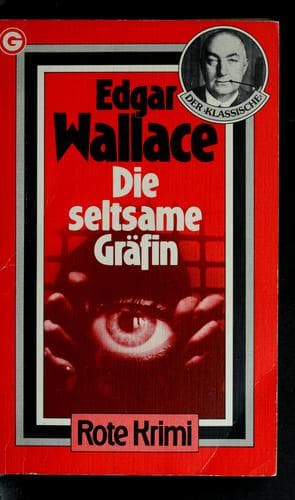
Countesses -- Fiction; Crime -- Fiction; Detective and mystery stories; Household employees -- Fiction; Young women -- Fiction
At the end of the passage was another door, which led into a large
hall, on either side of which was a steel alleyway, reached by broad
stairs in the centre of the hall. Lois looked up, saw the netting
above her head and shivered. It was placed there, she knew, to prevent
these unhappy women from dashing themselves to death from the top
landings.
“Here we are,” said the governor, and opened the cell door with his
pass-key.
For five minutes she was engaged with the sulky woman, who had a
whining grievance against everybody except herself; and at last, with
a heartfelt sigh of relief, she came out through the door and joined
the governor. As he locked the cell, she said:
“Thank heaven I shan’t come here any more.”
“Giving up being a lawyer?” he asked good-humouredly. “Well, I never
thought it was much of a profession for a girl.”
“You give my intelligence too great credit,” she smiled. “I am a very
commonplace clerk and have no other knowledge of the law than that
stamps must be put on certain documents and in certain places!”
They did not go back the way they had come, but went out through the
hall into the parade ground. So perfect was the organisation that in
the brief space she had been in the cell the yard was filled with grey
figures parading in circles.
“Exercise hour,” said the governor. “I thought you’d like to see
them.”
The girl’s heart was filled with pity and an unreasoning resentment
against the law which had taken these women and made them into so many
meaningless ciphers. With their print dresses and white mob caps,
there was something very ugly, very sordid about them, something which
clutched at the girl’s heart and filled her with a vague fear. There
were women of all ages, old and young, some mere girls, some grown
ancient in sin, and each bore on her face the indefinable stamp of
abnormality. There were fierce faces, cunning faces, weak, pathetic
faces that turned to her as the ghastly circle shuffled on its way;
faded eyes that stared stupidly, dark eyes that gleamed with malignant
envy, careless eyes that did not trouble to investigate her further
than by a casual glance. Shambling, shuffling women, who seemed after
a while to be unreal.
The circle had nearly passed in hideous completeness when Lois saw a
tall figure that seemed to stand out from that ground of horror. Her
back was straight, her chin uplifted, her calm eyes looked straight
ahead. She might have been forty, or fifty. The delicately moulded
features were unlined, but the hair was white. There was something
divinely serene in her carriage.
“What is that woman doing here?” said Lois, before she realised that
she had asked a question which no visitor must put to a prison
official.
Dr. Stannard did not answer her. He was watching the figure as it came
abreast. For a second the woman’s eyes rested gravely upon the girl.
Only for a second--just that period of time that a well-bred woman
would look at the face of another--and then she had passed.
Public-domain text, read in full here on John Shaqi.
Reviews
Reviews
No reviews yet
Be the first to share your thoughts on this work.
Join the Discussion
Join the discussion
Sign in to leave a comment or review.
Sign InorCreate an account