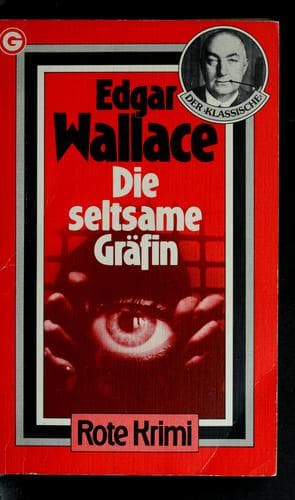
Countesses -- Fiction; Crime -- Fiction; Detective and mystery stories; Household employees -- Fiction; Young women -- Fiction
He cranked up the engine and stood aside. She could not resist the
temptation:
“If you follow me now you’ll have a shock,” she said. “I am going to
Telsbury Prison.”
The effect on the man was startling; he stared in amazement and fear.
His jaw dropped, and into his eyes came a queer look of wonder.
“Where are you going?” he asked huskily, as though he doubted the
evidence of his ears.
“I am going to Telsbury Prison--please.”
She waved him out of her way. The car with the broken wind-screen went
noisily along the broad high road, leaving the man to stare. And then:
“Good God!” said Michael Dorn.
Chapter Three
The grim entrance of Telsbury Convict Establishment is mercifully
hidden behind a screen of thick-growing pines. Its red walls have
mellowed with age, and but for the high tower in the centre of the
prison a traveller would pass it unnoticed. Hiding all the heartache
that has made the word “Dartmoor” synonymous with sorrow, Telsbury has
missed the fame of its fellow-prison.
Lois had already made two visits to the prison on her employer’s
business. A client of the firm had prosecuted a woman who had been
engaged in systematic fraud, and she had been sent down for five
years. It had been necessary to secure her signature to certain deeds
transferring back to their lawful owner stocks which had been
fraudulently converted.
Stopping her car broadside on to the high black gates, she descended
and pulled a bell. Almost immediately a grating was slipped back and
two watchful eyes surveyed her. Though the gatekeeper recognised her,
it was not until she had shown him the Home Office order which she
carried that he turned the key in the lock and admitted her to a bare
stone room, furnished with a desk, a stool, two chairs, and a table.
The warder read the order again and pressed a bell. He, his two
reliefs, and the governor were the only men who came within those
walls, and his sphere of operations was restricted to the room and the
archway, barred with steel railings, which cut the courtyard off from
the rest of the prison.
“Getting tired of coming here, miss?” he asked with a smile.
“Prisons make me very tired and very sick at heart,” said the girl.
He nodded.
“There are six hundred women inside here who are more tired and more
sick than you will ever be, I hope, miss,” he said conventionally.
“Not that I ever see any of them. I open the gate to the prison van
and never catch a sight of them again, not even when they go out.”
There was a snap of a lock, and a young wardress in neat blue uniform
came in and greeted Lois with a cheery nod. The girl was conducted
through a small steel gate, across a wide parade ground, empty at that
moment, through another door and along a passage into the governor’s
small office.
“Good morning, doctor,” she said. “I’ve come to see Mrs. Desmond,” and
displayed her papers before the grey-haired governor.
“She’ll be in her cell now,” he said. “Come along, Miss Reddle, I’ll
take you there myself.”
Public-domain text, read in full here on John Shaqi.
Reviews
Reviews
No reviews yet
Be the first to share your thoughts on this work.
Join the Discussion
Join the discussion
Sign in to leave a comment or review.
Sign InorCreate an account