The Sufistic Quatrains of Omar KhayyamOmar Khayyam
ReligionSufism
The Sufistic Quatrains of Omar Khayyam
Omar Khayyam
FitzGerald, Edward, 1809-1883; Sufi poetry
«His Takhallus or poetical name (Khayyam) signifies a Tentmaker, and he
is said to have at one time exercised that trade, perhaps before Nizam
ul Mulk's generosity raised him to independence. Many Persian poets
similarly derive their names from their occupations; thus we have Attar,
‹a druggist,› Assar, ‹an oil presser,› etc.[5] Omar himself alludes to
his name in the following whimsical lines:--
«‹Khayyam, who stitched the tents of science,
Has fallen in grief's furnace and been suddenly burned;
The shears of Fate have cut the tent ropes of his life,
And the broker of Hope has sold him for nothing!›
«We have only one more anecdote to give of his life, and that relates to
the close; it is told in the anonymous preface which is sometimes
prefixed to his poems; it has been printed in the Persian in the
appendix to Hyde's ‹Veterum Persarum Religio,› p. 499; and D'Herbelot
alludes to it in his _Bibliothèque_, under _Khiam_:[6]--
«‹It is written in the chronicles of the ancients that this King of the
Wise, Omar Khayyam, died at Naishapur in the year of the Hegira 517
(A.D. 1123); in science he was unrivalled,--the very paragon of his age.
Khwajah Nizami of Samarcand, who was one of his pupils, relates the
following story: «I often used to hold conversations with my teacher
Omar Khayyam, in a garden; and one day he said to me, ‹My tomb shall be
in a spot where the north wind may scatter roses over it.› I wondered at
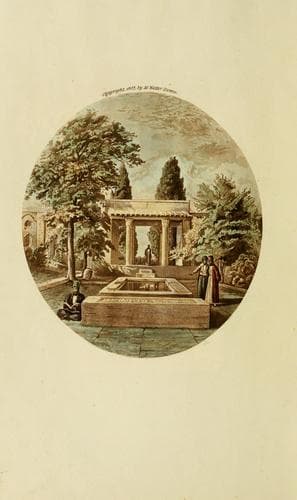
the words he spake, but I knew that his were no idle words.[7] Years
after, when I chanced to revisit Naishapur, I went to his final
resting-place, and lo! it was just outside a garden, and trees laden
with fruit stretched their boughs over the garden wall, and dropped
their flowers upon his tomb, so that the stone was hidden under them.»›»
Thus far--without fear of trespass--from the «Calcutta Review.» The
writer of it, on reading in India this story of Omar's grave, was
reminded, he says, of Cicero's account of finding Archimedes' tomb at
Syracuse, buried in grass and weeds. I think Thorwaldsen desired to have
roses grow over him; a wish religiously fulfilled for him to the present
day, I believe. However, to return to Omar.
Public-domain text, read in full here on John Shaqi.
Reviews
Reviews
No reviews yet
Be the first to share your thoughts on this work.
Join the Discussion
Join the discussion
Sign in to leave a comment or review.
Sign InorCreate an account