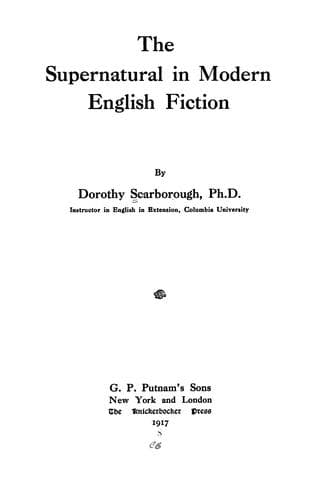
The Supernatural in Modern English FictionScarborough, Dorothy
History
The Supernatural in Modern English Fiction
Scarborough, Dorothy
English fiction -- History and criticism; Supernatural in literature
Inexplicable music forms one of the commonest elements of mystification
in these romances. Its constant recurrence suggests that there
must have been victrolas in medieval times. The music is chiefly
instrumental, sometimes on a harp, sometimes on a violin, though
occasionally it is vocal. Mrs. Radcliffe and Regina Maria Roche
accompany the heroine's musings at all hours with doleful strains
suspected to be of supernatural performance. The appearance of the
devil masquerading as the Moor[35] is heralded by flute-like sounds,
and in _The Spirit of Turrettville_ the specter plays on the harp and
sings. The recurrence of the theme is so constant that it acquires the
monotony of a tantalizing refrain.
[35] In _Zofloya_.
Groans and wails of unexplained origin also aid in building up
suspense. In fact, a chorus of lugubriousness arises so that the Gothic
pages groan as they are turned. Mysterious disappearances likewise
increase the tension. Lights appear and vanish with alarming volition,
doors open and close with no visible human assistance, and various
other supernatural phenomena aid in Gothic mystery and mystification.
* * * * *
Although the ghosts and devils occupy the center of interest in the
horrific romance, the human characters must not be lightly passed over.
There are terror temperaments as well as Gothic castles, tempests, and
scenes. The interfering father or other relative, brutal in threats
and breathing forth slaughter, comes in frequently to oppress the
hero or heroine into a loathed marriage. The hero is of Radcliffian
gloom, a person of vague past and saturnine temper, admired and
imitated by Byron. Sir Walter Raleigh,[36] says, "The man that Byron
tried to be was the invention of Mrs. Radcliffe." The officials of
the Inquisition and the dominant figures in convents and monasteries
show fiendish cruelty toward helpless inmates, gloating in Gothic
diabolism over their tortures. There are no restful human shades of
gray, only unrelieved black and white characters. The Romantic heroine
is a peculiar creature, much given to swooning and weeping, yet always
impeccably clad in no matter what nocturnal emergency she is surprised.
She tumbles into verse and sketching on slight provocation, but her
worst vice is that of curiosity. In her search for supernatural horrors
she wanders at midnight through apartments where she does not belong,
breaks open boxes, desks, and secret hiding-places to read whatever
letters or manuscripts she can lay her hands on, behaving generally
like the yellow journalist of fiction.
[36] In _The English Novel_, p. 228.
Public-domain text, read in full here on John Shaqi.
Reviews
Reviews
No reviews yet
Be the first to share your thoughts on this work.
Join the Discussion
Join the discussion
Sign in to leave a comment or review.
Sign InorCreate an account