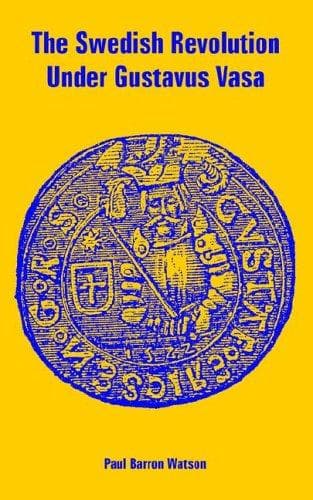
The Swedish Revolution Under Gustavus Vasa — John Shaqi
The Swedish Revolution Under Gustavus VasaWatson, Paul Barron
History
The Swedish Revolution Under Gustavus Vasa
Watson, Paul Barron
Gustav I Vasa, King of Sweden, 1496-1560; Sweden -- History -- Gustav I Vasa, 1523-1560
The century following this catastrophe was marked by violence and
bloodshed. In all the setting up and pulling down of kings which ended
in the Kalmar Union, the Swedish peasantry, now the body of the nation,
had had no part. They had long watched in silence the overpowering
growth of the magnates and of the Church; they had seen their own rights
gradually, but surely, undermined; and they now beheld the whole nation
given into the hand of a foreign king. All this tyranny was beginning to
produce its natural effect. A spirit of rebellion was spreading fast.
However, open insurrection was for the moment averted by the prudence of
the regent; so long as she lived the people were tolerably content. She
ruled the Cabinet with an iron hand, and refused to appoint a
chancellor, the officer who had hitherto done much to bind the Cabinet
together. After her death Erik attempted to carry out a similar policy,
and introduced a number of foreigners into the Swedish Cabinet. But his
continual absence from the realm weakened his administration, and gave
great license to his officers, who by their cruelty won the hatred of
the people. At last, in 1433, the peasantry of Dalarne rebelled against
the tyranny of the steward whom their Danish ruler had put over them,
and in 1435, under the leadership of a courageous warrior, Engelbrekt
Engelbrektsson, compelled the king to call a general diet, the first
since 1359, consisting of all the people in the realm who cared to take
part. This diet, under the enthusiasm of the moment, elected Engelbrekt
commander of the kingdom. But the hopes of the peasantry were soon
blasted. In the next year Engelbrekt was murdered by a Swedish magnate,
and by a general diet Karl Knutsson, another magnate, was chosen to fill
his place. King Erik was now tottering to his fall. He was no longer
king in anything but name. His fall, however, benefited only the
magnates of the realm. By a general diet of 1438, to which all people in
the realm were called, Knutsson was elected regent. But his reign came
in the next year to an untimely end. His fellow-magnates, jealous of his
power, forced him to lay it down; and in 1440 the Cabinet called Erik's
nephew, Christopher of Bavaria, already king of Denmark, to the Swedish
throne. Thus ended the first effort of the Swedish peasantry to throw
off the Danish yoke. It had begun with high promises for the people, but
had ended in the restoration of the Cabinet to all its former power.
From this time forth the Cabinet was again practically the governing
body in the realm. But it was no longer at unity with itself. One party,
led by the great house of Oxenstjerna, was for preserving the Union. The
other consisted of the adherents of Karl Knutsson, who hoped to put the
crown on his own head. In 1448 King Christopher died, and, in the
difference of feeling which reigned, the Cabinet called a general diet
of all the magnates with representatives from the peasantry and
Public-domain text, read in full here on John Shaqi.
Reviews
Reviews
No reviews yet
Be the first to share your thoughts on this work.
Join the Discussion
Join the discussion
Sign in to leave a comment or review.
Sign InorCreate an account