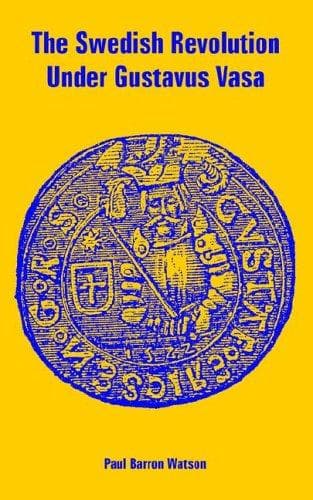
The Swedish Revolution Under Gustavus VasaWatson, Paul Barron
History
The Swedish Revolution Under Gustavus Vasa
Watson, Paul Barron
Gustav I Vasa, King of Sweden, 1496-1560; Sweden -- History -- Gustav I Vasa, 1523-1560
guilds were composed wholly of tradespeople, others wholly of artisans;
and there were still others formed for social or religious purposes,
comprising members of various trades. Of these latter guilds the most
aristocratic and influential was the Guild of the Sacred Body. Inside a
guild the members were bound together by the warmest bonds of
friendship. They ordinarily lived in the same quarter of the town; they
cared for their brothers in sickness or poverty, and said Mass in common
for the souls of their deceased. Each guild held meetings at stated
intervals to vote on various matters concerning its affairs. In case of
war the different guilds enlisted in separate companies. Over and above
all the guilds were a burgomaster and council elected by their
fellow-townsmen, their duties being to regulate the relations of the
various guilds to one another, and provide for the general welfare of
the city. Thus the inhabitants of Stockholm formed a miniature republic
by themselves. They governed themselves in nearly all local matters.
They bought, sold, and exchanged according to their own laws and
regulations. They married and gave in marriage after their own caprice.
Industrious, skilful, with little ambition, they bustled about their
narrow streets, jostling those at their elbow and uttering slander
against those out of hearing. In short, they led the humdrum life
incident to all small towns in time of peace, and were ever eager to
vary this monotony at the first sound of war.[14]
Into this community Gustavus was ushered in the year 1514. He was then
but eighteen, and was summoned by the regent to the royal court to
complete his education.[15] He found himself at once in clover. Three
years before, his mother's half-sister, Christina Gyllenstjerna, had
married the young regent; and the youth on coming to Stockholm was
received as one of the family in the royal palace.
Among all the personages then at court, the most interesting, by all
odds, was the regent's wife, Christina. This woman is one of the most
puzzling characters in Swedish history. On her father's side of royal
lineage, and on her mother's descended from one of the oldest families
in Sweden, she inherited at the same time a burning desire for personal
advancement and an enthusiasm for the glory of her native land. Wedded
to a handsome, daring, impetuous youth of twenty-one, the nation's
favorite, she entered with her whole heart into all his projects, and
was among his most valuable counsellors whether in peace or war. In
force of character and in personal bravery she was scarce inferior to
her heroic husband, and yet she lacked not discretion or even
shrewdness. She was the idol of the Swedish people, and before many
years were passed was to have an opportunity to test their love.
Public-domain text, read in full here on John Shaqi.
Reviews
Reviews
No reviews yet
Be the first to share your thoughts on this work.
Join the Discussion
Join the discussion
Sign in to leave a comment or review.
Sign InorCreate an account