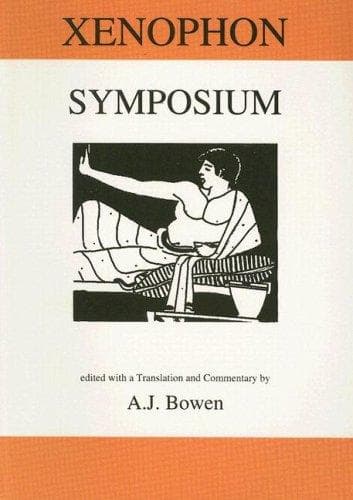
Classical literature; Philosophy, Ancient; Socrates, 470 BC-399 BC
Nay, take the fair deeds of to-day: and you shall find them wrought
rather for the sake of praise by volunteers in toil and peril, than by
men accustomed to choose pleasure in place of honour. And yet Pausanias,
(64) the lover of the poet Agathon, (65) making a defence in behalf (66)
of some who wallow in incontinence, has stated that an army composed
of lovers and beloved would be invincible. (67) These, in his opinion,
would, from awe of one another, have the greatest horror of destruction.
A truly marvellous argument, if he means that men accustomed to turn
deaf ears to censure and to behave to one another shamelessly, are more
likely to feel ashamed of doing a shameful deed. He adduced as evidence
the fact that the Thebans and the Eleians (68) recognise the very
principle, and added: Though they sleep inarmed, they do not scruple
to range the lover side by side with the beloved one in the field of
battle. An instance which I take to be no instance, or at any rate
one-sided, (69) seeing that what they look upon as lawful with us is
scandalous. (70) Indeed, it strikes me that this vaunted battle-order
would seem to argue some mistrust on their part who adopt it--a
suspicion that their bosom friends, once separated from them, may forget
to behave as brave men should. But the men of Lacedaemon, holding that
"if a man but lay his hand upon the body and for lustful purpose, he
shall thereby forfeit claim to what is beautiful and noble"--do, in
the spirit of their creed, contrive to mould and fashion their "beloved
ones" to such height of virtue, (71) that should these find themselves
drawn up with foreigners, albeit no longer side by side with their own
lovers, (72) conscience will make desertion of their present friends
impossible. Self-respect constrains them: since the goddess whom the men
of Lacedaemon worship is not "Shamelessness," but "Reverence." (73)
(64) See Cobet, "Pros. Xen." p. 15; Plat. "Protag." 315 D; Ael. "V.
H." ii. 21.
(65) Ib.; Aristot. "Poet." ix.
(66) Or, "in his 'Apology' for."
Public-domain text, read in full here on John Shaqi.
Reviews
Reviews
No reviews yet
Be the first to share your thoughts on this work.
Join the Discussion
Join the discussion
Sign in to leave a comment or review.
Sign InorCreate an account