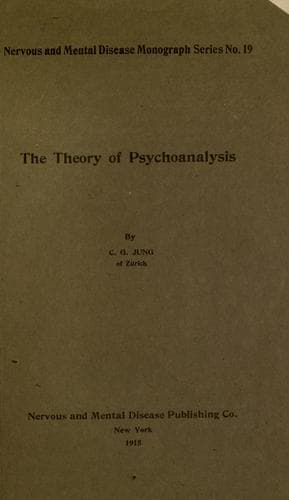
The Theory of PsychoanalysisJung, C. G. (Carl Gustav)
Science
The Theory of Psychoanalysis
Jung, C. G. (Carl Gustav)
Neuroses; Psychoanalysis; Psychology, Pathological; Sex
It was soon noticed that such patients lived still partly or wholly in
their childhood-world, although quite unconscious themselves of this
fact. It is a difficult task for psychoanalysis so exactly to
investigate the psychological mode of adaptation of the patients as to
be capable of putting its finger on the infantile misunderstanding. We
find among neurotics many who have been spoiled as children. These cases
give the best and clearest example of the infantilism of their
psychological mode of adaptation. They start out in life expecting the
same friendly reception, tenderness and easy success, obtained with no
trouble, to which they have been accustomed by their parents in their
youth. Even very intelligent patients are not capable of seeing at once
that they owe the complications of their life and their neurosis to the
trail of their infantile emotional attitude. The small world of the
child, the familiar surroundings—these form the model of the big world.
The more intensely the family has stamped the child, the more will it be
inclined, as an adult, instinctively to see again in the great world its
former small world. Of course this must not be taken as a conscious
intellectual process. On the contrary, the patient feels and sees the
difference between now and then, and tries to adapt himself as well as
he can. Perhaps he will even believe himself perfectly adapted, for he
grasps the situation intellectually, but that does not prevent the
emotional from being far behind the intellectual standpoint.
Unconscious Phantasy
Public-domain text, read in full here on John Shaqi.
Reviews
Reviews
No reviews yet
Be the first to share your thoughts on this work.
Join the Discussion
Join the discussion
Sign in to leave a comment or review.
Sign InorCreate an account