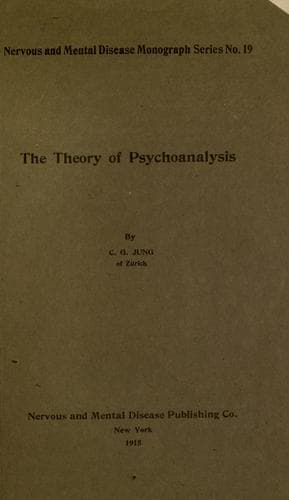
The Theory of PsychoanalysisJung, C. G. (Carl Gustav)
Science
The Theory of Psychoanalysis
Jung, C. G. (Carl Gustav)
Neuroses; Psychoanalysis; Psychology, Pathological; Sex
The more we penetrate into the heart of infantile development, the more
we receive the impression that as little can be found there of
etiological significance, as in the infantile shock. Even with the
acutest ferreting into history, we shall never discover why people
living on German soil had just such a fate, and why the Gauls another.
The further we get away, in analytical investigations from the epoch of
the manifest neurosis, the less can we expect to find the real motive of
the neurosis, since the dynamic disproportions grow fainter and fainter
the further we go back into the past. In constructing our theory so as
to deduce the neurosis from causes in the distant past, we are first and
foremost obeying the impulse of our patients to withdraw themselves as
far as possible from the critical present. The pathogenic conflict
exists _only in the present moment_. It is just as if a nation wanted to
regard its miserable political conditions at the actual moment as due to
the past; as if the Germany of the 19th century had attributed its
political dismemberment and incapacity to its suppression by the Romans,
instead of having sought the actual sources of her difficulties in the
present. _Only_ in the _actual present_ are the effective causes, and
only here are the possibilities of removing them.
The Etiological Significance of the Actual Present
A greater part of the psychoanalytic school is under the spell of the
conception that the conflicts of childhood are conditio sine qua non for
the neuroses. It is not only the theorist, who studies the psychology of
childhood from scientific interest, but the practical man also, who
believes that he has to turn the history of infancy inside out to find
there the dynamic source of the actual neurosis—it were a fruitless
enterprise if done under this presumption. In the meantime, the most
important factor escapes the analyst, namely, the conflict and the
claims of the present time. In the case before us, we should not
understand any of the motives which produced the hysterical attacks if
we looked for them in earliest childhood. It is the form alone which
those reminiscences determine to a large extent, but the dynamic
originates from the present time. The insight into the actual meaning of
these motives is real understanding.
Public-domain text, read in full here on John Shaqi.
Reviews
Reviews
No reviews yet
Be the first to share your thoughts on this work.
Elsewhere in the archive
Join the Discussion
Join the discussion
Sign in to leave a comment or review.
Sign InorCreate an account