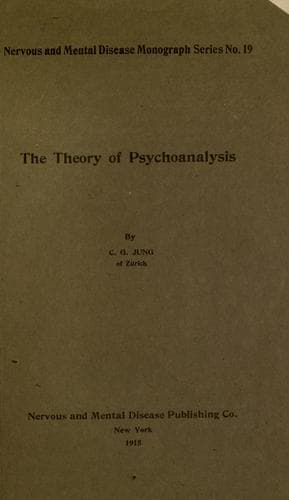
The Theory of PsychoanalysisJung, C. G. (Carl Gustav)
Science
The Theory of Psychoanalysis
Jung, C. G. (Carl Gustav)
Neuroses; Psychoanalysis; Psychology, Pathological; Sex
We have already seen that the transference brings about difficulties,
because the personality of the physician is assimilated with the image
of the patient’s parents. The first part of the analysis, the
investigation of the patient’s complexes, is rather easy, chiefly
because a man is relieved by ridding himself of his secrets,
difficulties and pains. In the second place, he experiences a peculiar
satisfaction from at last finding some one who shows interest in all
those things to which nobody hitherto would listen. It is very agreeable
to find a person, who tries to understand him, and does not shrink back.
In the third place, the expressed intention of the physician, to
understand him and to follow him through all his erring ways,
pathetically affects the patient. The feeling of being understood is
especially sweet to the solitary souls who are forever longing for
“understanding.” In this they are insatiable. The beginning of the
analysis is for these reasons fairly easy and simple. The improvement so
easily gained, and the sometimes striking change in the patient’s
condition of health are a great temptation to the psychoanalytic
beginner to slip into a therapeutic optimism and an analytical
superficiality, neither of which would correspond to the seriousness and
the difficulties of the situation. The trumpeting of therapeutic
successes is nowhere more contemptible than in psychoanalysis, for no
one is better able to understand than a psychoanalyst how the so-called
result of the therapy depends on the coöperation of nature and the
patient himself. The psychoanalyst may rest content with possessing an
advanced scientific insight. The prevailing psychoanalytic literature
cannot be spared reproach that some of its works do give a false
impression as to its real nature. There are therapeutical publications
from which the uninitiated receive the impression that psychoanalysis is
more or less a clever trick, with astonishing effects. The first part of
analysis, where we try to understand, and which, as we have seen before,
offers much relief to the patient’s feelings, is responsible for these
illusions. These incidental benefits help the phenomenon of
transference. The patient has long felt the need of help to free him
from his inward isolation and his lack of self-understanding. So he
gives way to his transference, after first struggling against it. For a
neurotic person, the transference is an ideal situation. He himself
makes no effort, and nevertheless another person meets him halfway, with
an apparent affectionate understanding; does not even get annoyed or
leave off his patient endeavors, although he himself is sometimes
stubborn and makes childish resistances. By this means the strongest
resistances are melted away, for the interest of the physician meets the
need of a better adaptation to extra-familial reality. The patient
obtains, through the transference, not only his parents, who used to
Public-domain text, read in full here on John Shaqi.
Reviews
Reviews
No reviews yet
Be the first to share your thoughts on this work.
Elsewhere in the archive
Join the Discussion
Join the discussion
Sign in to leave a comment or review.
Sign InorCreate an account