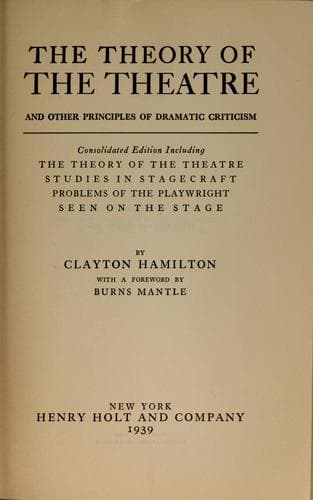
The Theory of the Theatre, and Other Principles of Dramatic CriticismHamilton, Clayton Meeker
History
The Theory of the Theatre, and Other Principles of Dramatic Criticism
Hamilton, Clayton Meeker
Drama -- History and criticism -- Theory, etc.; Theater
The Intention of Permanence, whether it be conscious or subconscious with
the artist, is a necessary factor of the noblest art. Many of us remember
the Court of Honor at the World's Columbian Exposition, at Chicago fifteen
years ago. The sculpture was good and the architecture better. In
chasteness and symmetry of general design, in spaciousness fittingly
restrained, in simplicity more decorative than deliberate decoration, those
white buildings blooming into gold and mirrored in a calm lagoon, dazzled
the eye and delighted the aesthetic sense. And yet, merely because they
lacked the Intention of Permanence, they failed to awaken that solemn happy
heartache that we feel in looking upon the tumbled ruins of some ancient
temple. We could never quite forget that the buildings of the Court of
Honor were fabrics of frame and stucco sprayed with whitewash, and that the
statues were kneaded out of plaster: they were set there for a year, not
for all time. But there is at Paestum a crumbled Doric temple to Poseidon,
built in ancient days to remind the reverent of that incalculable vastness
that tosses men we know not whither. It stands forlorn in a malarious
marsh, yet eternally within hearing of the unsubservient surge. Many of its
massive stones have tottered to the earth; and irrelevant little birds sing
in nests among the capitals and mock the solemn silence that the Greeks
ordained. But the sacred Intention of Permanence that filled and thrilled
the souls of those old builders stands triumphant over time; and if only a
single devastated column stood to mark their meaning, it would yet be a
greater thing than the entire Court of Honor, built only to commemorate the
passing of a year.
Public-domain text, read in full here on John Shaqi.
Reviews
Reviews
No reviews yet
Be the first to share your thoughts on this work.
Elsewhere in the archive
Join the Discussion
Join the discussion
Sign in to leave a comment or review.
Sign InorCreate an account