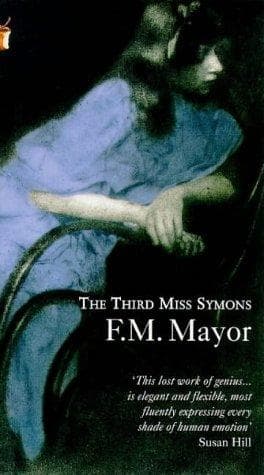
The Third Miss SymonsMayor, F. M. (Flora Macdonald)
General
The Third Miss Symons
Mayor, F. M. (Flora Macdonald)
England -- Social life and customs -- 19th century -- Fiction; Single women -- Fiction
It was to William that she turned, though she remembered clearly the
disappointing interview of her childhood. William, now a solicitor in
London, came home for a few days' holiday. The Sunday of his visit was
wet. When Mr. and Mrs. Symons were both asleep in the drawing-room, he
and Henrietta sat in the former school-room, and kept up friendly
small-talk about the neighbourhood. There was something so solid and
comfortable about his face that she felt she must tell him. She wanted
to lean on someone; she had not, she never had, any satisfaction, any
pride in battling for herself. Yet she knew that William's face was
deceptive; it would be much better not to speak. She determined,
therefore, that she would say very little, and speak as coolly as she
could. She began, but before she could stop herself, the whole story was
out, and much more than the story, unbridled abuse of Louie, who was
William's favourite sister. She only stopped at last, because her sobs
made it impossible to speak.
"It does seem unlucky," said William, "very unlucky. I should talk it
over with mother."
"Mother thinks it was my own fault. I know she does."
"Well--um--write to Minna; yes, you might write to Minna."
"Minna is only interested in the baby. She hardly ever writes; besides,
she never cared about me at all. She would be glad."
"Oh, well, I shouldn't think it was worth while taking it to heart. Just
go out to plenty of dances and be jolly; you mustn't mope. If you can
get Aunt Mercer to give you a bed, I'll take you to the play. That will
do you all the good in the world."
"It's very kind of you, William."
"Oh, that's all right. Well," going to the window, "it's no good staying
in all the afternoon, it makes one so hipped. I shall take a turn and
look in on Beardsley on my way back. Tell mother not to wait supper for
me."
She knew she had better have said nothing. He hated the recesses of the
heart being revealed, particularly those special recesses of a woman's
heart; he had thought her unmaidenly. But he was sorry for her; he took
her to the play, a rousing farce, for he was one of those who naively
consider that two hours of laughing can compensate for months of misery,
and even be a remedy. He gave her a brooch also, and said to his
mother, "I think Etta gets low by herself, now Minna is married and
Louie is away. Why shouldn't she go for some visits?"
It may seem strange that Henrietta should have spread broadcast a grief
which most people would keep hidden in their own hearts. But it is one
of the saddest things about lonely people, that, having no proper
confidant, they tell to all and sundry what ought never to be told to
more than one. When, however, the overmastering desire for sympathy had
passed, words cannot express her regret that she had spoken. For years
and years afterwards it would suddenly come upon her, "I told him and he
despised me," and she would beat her foot on the floor with all her
might, in a useless transport of remorse.
Public-domain text, read in full here on John Shaqi.
Reviews
Reviews
No reviews yet
Be the first to share your thoughts on this work.
Join the Discussion
Join the discussion
Sign in to leave a comment or review.
Sign InorCreate an account