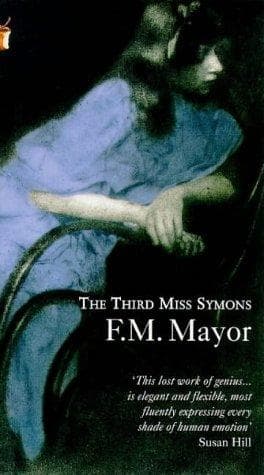
The Third Miss SymonsMayor, F. M. (Flora Macdonald)
General
The Third Miss Symons
Mayor, F. M. (Flora Macdonald)
England -- Social life and customs -- 19th century -- Fiction; Single women -- Fiction
Both Louie and Henrietta had felt it was wiser not to see too much of
one another after Mr. Dockerell's proposal. Louie had gone away for a
month or six weeks, and when she came back, Henrietta went for a long
visit to Minna.
With two babies, the youngest very delicate, Minna was completely
absorbed. She was emphatically Mrs. Willard now, not Minna Symons. Mrs.
Symons had told her something of Henrietta's circumstances, and Minna
considered that the best balm would be her babies. So they might have
been for people with a natural admiration for babies, but this Henrietta
had not got. If Minna's children had been neglected she would have loved
them dearly, but when they were surrounded by the jealous care of
mother, nurse, nursemaid, and (if any space was left for him) father,
there was nothing for her but to look on as an outsider.
It was during this visit that she heard of the young man's engagement.
She did not realize, till she heard, how tightly she had been clinging
to the hope that he might come back. Close following on that came the
news that Louie was engaged to a most amiable and agreeable colonel.
This made her more bitter, if it was possible to be more bitter, against
Louie than before. Louie was not merely let off scot-free for what she
did, but was to have every happiness given to her. Why? The old problem
of her Confirmation year pressed itself on her, only now she felt less
mournful and more acrid.
Her troubles made her peevish and disagreeable, as was apparent from
Minna's kindly admonition.
"I think," said she, as they sat sewing one morning, "that I really
ought to warn you not to talk quite so loud and so positively. I don't
like saying anything, but of course I am older than you, and that is the
sort of thing that spoils a girl's chances. Men don't like it. And your
temper--even Arthur noticed it, and he is not at all an observant man. I
daresay you hardly realize the importance of a good temper, Etta, but in
my opinion it makes more difference in life than anything else."
Henrietta came back three days before Louie's wedding. Louie repented
the injury she had done, and on the last night she came into Henrietta's
room and apologized. "You know, Etty, I am very sorry, very, very sorry.
Of course I had no idea how you felt about him. He wasn't the sort of
man one could take very seriously, at least that was what I thought.
Anyhow I wouldn't worry about it any more, for you know I think he
cannot have been very seriously touched, or he would have made some
effort to see you again, surely, after his little episode with me."
Louie felt more than her words conveyed, but she could not demean
herself to show too much.
"Perhaps you didn't mean it unkindly," said Henrietta; "I shall try to
believe you, but you've wrecked my life."
"Etta is so exaggerated and hysterical," said Louie afterwards, talking
things over. But as a matter of fact Henrietta spoke only the sober
truth.
CHAPTER IV
Public-domain text, read in full here on John Shaqi.
Reviews
Reviews
No reviews yet
Be the first to share your thoughts on this work.
Join the Discussion
Join the discussion
Sign in to leave a comment or review.
Sign InorCreate an account