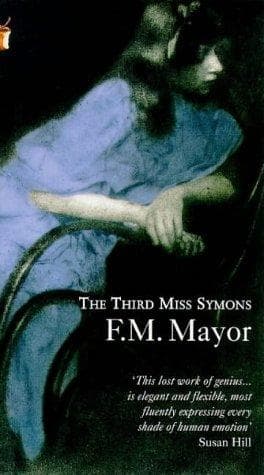
The Third Miss SymonsMayor, F. M. (Flora Macdonald)
General
The Third Miss Symons
Mayor, F. M. (Flora Macdonald)
England -- Social life and customs -- 19th century -- Fiction; Single women -- Fiction
After Louie's wedding Henrietta went to stay with an aunt, her father's
eldest sister, almost a generation older than he was. She lived in a
little white house in the country, with a green verandah and French
windows. She was a kind, nice old lady, not well off, a humble
great-aunt to the whole village. Children continually came to eat her
mulberries; girls were found places; sick people were sent jelly, and
there was always a great deal of sewing and knitting for poor friends.
She did her best to make the visit pass cheerfully; she had some little
scheme of pleasure for each day, and so many people came and went that,
though not exciting, the life could not possibly be called dull.
Henrietta did not know whether Mrs. Symons had mentioned her trouble to
her aunt; she hoped not. Now that the first shock was over, she had
become sensitive on the subject, and did not wish to speak about it.
From a little speech her aunt made, it is possible that Mrs. Symons had
said something.
One day as they sat talking comfortably and confidentially over the
fire, the conversation turned on her aunt's past days. She had been left
motherless, the eldest of a large family, when she was nineteen or
twenty. It was evidently her duty to devote herself to the younger ones,
and when a man presented himself whom she loved and by whom she was
loved, she felt that she could not be spared from home.
Henrietta saw that she was bracing herself to say something. At last out
it came:
"You know, my dear, I think in spite of--I mean that there are many
things besides--though when one has hoped--still life can be very happy,
very peaceful, without. Why, there is this garden, and there are those
three darling little children next door."
Henrietta knew that this unanalysable sentence was meant to comfort her.
She felt grateful, but she was not comforted. Her aunt's life was the
sweetest and happiest possible for old age, but could she at twenty
settle down to devising treats for other people's children, or sewing
garments for the poor? It made her feel sick and dismal to think of it.
Besides, their circumstances were not similar. Her aunt, fortified by
the spirit of self-sacrifice, had resigned what she loved, but she had
the reward of being the most necessary member of her circle. Henrietta
had had no scope for self-sacrifice, for she had never had anything to
give up. In fact she envied her aunt, for she realized now that Mr.
Dockerell could never have cared for her. And far from being the most
necessary member of her family, her difficulty was to squeeze into a
place at all.
Public-domain text, read in full here on John Shaqi.
Reviews
Reviews
No reviews yet
Be the first to share your thoughts on this work.
Join the Discussion
Join the discussion
Sign in to leave a comment or review.
Sign InorCreate an account