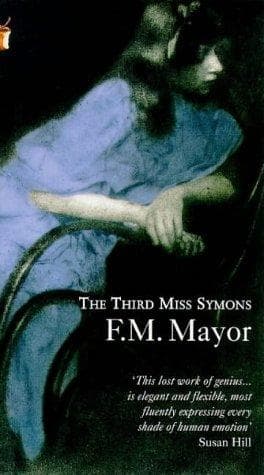
The Third Miss SymonsMayor, F. M. (Flora Macdonald)
General
The Third Miss Symons
Mayor, F. M. (Flora Macdonald)
England -- Social life and customs -- 19th century -- Fiction; Single women -- Fiction
What were they all so excited about? Henrietta had never cared about
abstract questions, and she could not see that there was any object in
discovering what the ancient Greeks thought about them more than two
thousand years ago. The evening before, she and Miss Gurney had had an
interesting conversation on the weekly averages of house-books. Then she
felt comfortable and on the solid earth. Why then, was she attending
lectures on Aristotle? Well, because Miss Gurney had a friend whose
cousin had married the lecturer, Professor Amery, and in the difficult
problem of choosing a subject, when there was nothing she really cared
to know about, this was as good a reason as any other.
Then Henrietta remembered how she and Emily Mence years ago at school,
had argued the whole of Saturday afternoon about Mary Queen of Scots,
and had not been on speaking terms the following day, because Emily had
called Mary frivolous. Had she ever really been that queer little girl?
Still she was anxious to give the lecturer a chance, most anxious, for
she had already had to suffer from Minna and Louie's sympathy that the
parish work was a failure. She read three chapters and fell asleep in
the middle of the fourth, and went to bed half an hour earlier than
usual. Next morning she could not remember a word of what she had read,
but for two dates and one sentence, which remained in her head. "Even
now, in the latter half of the nineteenth century, in spite of an
unparalleled advance in our knowledge of the natural sciences, the world
has not yet produced a mind, which can equal that of Aristotle in its
astounding versatility and profundity of learning." She determined to
persevere, but was it her subconscious self which discovered a vast
arrear of letters which it was incumbent on her to answer before she
thought of anything else?
After the lecture there was a class at which everyone talked. Even the
dear old lady next to Henrietta was asking a quavering question. Yes, a
little delicate old lady had energy to keep the current of the lecture
in her head. She said that Aristotle's problem whether it was possible
for slaves to have ordinary virtues, made her think of the difference in
the Christian teaching of St. Paul's epistles. Had any of the other
Greek philosophers been more humane in their views on slavery? Then
another voice struck in, and compared the ancient idea of slavery with
the slave code of the United States. The voice was rather strident, but
not unpleasant. It had a great deal to say, and for some minutes seemed
likely to take the lecture altogether from the mouth of the lecturer.
Henrietta looked in its direction, and saw a small apple-cheeked elderly
lady. The voice and the face both set her thinking, and by the end of
the lecture she was certain that the elderly lady was Miss Arundel. She
spoke, and when Miss Arundel had recollected who she was (it took a
little time), Henrietta received a most cordial invitation to tea.
Public-domain text, read in full here on John Shaqi.
Reviews
Reviews
No reviews yet
Be the first to share your thoughts on this work.
Join the Discussion
Join the discussion
Sign in to leave a comment or review.
Sign InorCreate an account