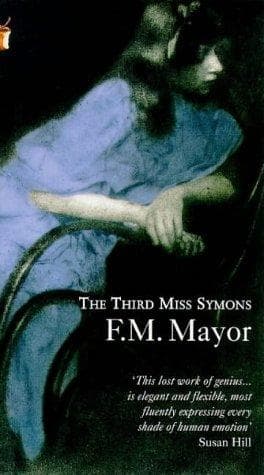
The Third Miss SymonsMayor, F. M. (Flora Macdonald)
General
The Third Miss Symons
Mayor, F. M. (Flora Macdonald)
England -- Social life and customs -- 19th century -- Fiction; Single women -- Fiction
Miss Arundel lived with a niece in a couple of rooms quite close to
Henrietta. Mrs. Marston was dead, and Miss Arundel had retired from the
school with just enough to live in decent comfort.
"So now, after teaching all my life, I am giving myself the treat of
learning, and I can't tell you how I am enjoying it, Miss Symons. Ada
and I both like Professor Amery so much." And she prosed on about the
lecture and the books she was reading, and did not much care to talk
over the old times, which were still very dear to Henrietta. It amazed
Henrietta to think that she had once blushed and trembled at the look of
this fussy, garrulous little governess.
She might be something of a bore, but there was no question of her
happiness, her interest in life. She had been getting up at six the last
three mornings that she might finish a book, a large book in two volumes
with close print, that had to be returned to the library. Henrietta
could imagine nothing in the world for which she would get up at six
o'clock. Then her thoughts went like lightning to the morning when the
telegram had come telling of little Madeline's death. The wound she had
thought healed burst out afresh; for a few seconds she felt as if she
could hardly breathe. Get up at six o'clock, of course she would have
forfeited her sleep with joy, night after night. In the midst of envy,
she felt something like contempt for Miss Arundel as a child running
after shadows.
On her way home, she compared her past with Miss Arundel's. Miss Arundel
could look back on busy, successful, happy years. Her room was filled
with tributes from old pupils, they were continually writing to her and
coming to see her, that Henrietta knew; she did not know how often they
had thanked her, and told her what they owed her.
Then she envied Miss Arundel's powers of mind. After forty years of
unceasing and exhausting work she seemed as fresh as a schoolgirl, and
far more capable of learning, while Henrietta after twenty years of
rest, had not merely lost all the qualities she had had as a child, but
had gained none from age and experience to take their place. The
realization of this fact startled and humiliated her. If her powers had
already declined at forty, what was to happen in the twenty years of
life that she might reasonably count upon as still before her?
She thought of Miss Arundel's words: "Etta Symons is a girl with
possibilities; I shall be interested to see how she will turn out." Miss
Arundel had long forgotten them, and now looked on Henrietta simply as a
co-member of the lectures, but she said to her niece after Henrietta had
been to tea, "What a very no-how person Miss Symons is; I should like to
shake her."
Public-domain text, read in full here on John Shaqi.
Reviews
Reviews
No reviews yet
Be the first to share your thoughts on this work.
Join the Discussion
Join the discussion
Sign in to leave a comment or review.
Sign InorCreate an account