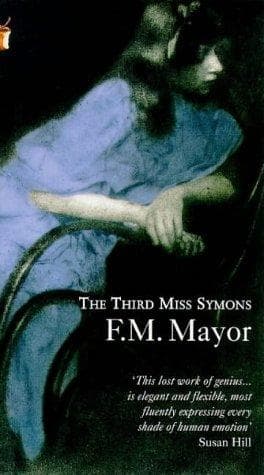
The Third Miss SymonsMayor, F. M. (Flora Macdonald)
General
The Third Miss Symons
Mayor, F. M. (Flora Macdonald)
England -- Social life and customs -- 19th century -- Fiction; Single women -- Fiction
Sometimes Evelyn and her husband and boys came out to stay with
Henrietta. The visits were not occasions of much happiness, and a
certain day remained for years as a mild nightmare in Evelyn's memory.
They were all in Milan one spring, when the patron of the hotel
announced that his lady cousin, who lived at some out-of-the-way little
country town, had heard from her friend, a priest in that same little
town, that on Tuesday there was to be a special festa in connection with
a local saint. Would the English ladies and gentlemen care to go? The
patron himself had the contempt of an enlightened man for saints and
festas, but he knew the curious attraction which such childishness
possesses for the English tourist.
All was arranged. The railway company had never intended that the little
town should be reached from Milan, but with an early start and much
changing of trains it was possible to accomplish the journey in two
hours and a half.
They arrived. There was no surprise among the hotel omnibuses at their
appearance, for the Italians have found that the English will turn up
everywhere; but to-day they were certainly the only representatives of
their nation.
They reached the church where the festa was to take place. It was
sleeping peacefully, brooded over by a delicious, sweet smell of dirt
and stale incense. Not a soul was to be seen. But as the party marched
indignantly up and down the aisles, another smell comes to join the
incense--garlic. A merry, good-humoured little priest appears; it is the
friend of the lady cousin.
He knew no English but "Yis, Yis"; they little Italian but the
essentials for travel: "Troppo, bello, antiquo." At the word "festa" he
shook his head very sadly, and he said "Domani" so many times that, with
the help of Henrietta's little phrase-book, they found it must mean
"To-morrow." They had come the wrong day. He was very much distressed
about it. To make up, if possible, for the disappointment, he showed
them all over the church and sacristy; he did not miss one memorial
tablet, not one disappearing fresco, and knowing the taste of the
English, he said, as each new item was displayed: "Molto, _molto_
antiquo."
He was so much attracted by Evelyn's charming middle-aged beauty and her
sweet English voice that when Santa Barbara's was exhausted, he could
not resist showing them, what he cared for much more, his own little
brand-new mission church, with its brilliant rosy-cheeked images and
artificial wreaths. The boys, fifteen and seventeen, had had enough of
churches after two days at Milan, and Evelyn could hear from Herbert's
conscientious, stumping tread that he was examining the church because a
soldier must always do his duty.
At length it was over; they came out into the sunshine, and the big town
clock struck a quarter to eleven. Their train home left at 5.30. The two
churches had only used up an hour and a quarter.
Public-domain text, read in full here on John Shaqi.
Reviews
Reviews
No reviews yet
Be the first to share your thoughts on this work.
Join the Discussion
Join the discussion
Sign in to leave a comment or review.
Sign InorCreate an account