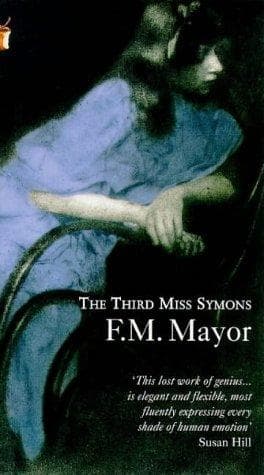
The Third Miss SymonsMayor, F. M. (Flora Macdonald)
General
The Third Miss Symons
Mayor, F. M. (Flora Macdonald)
England -- Social life and customs -- 19th century -- Fiction; Single women -- Fiction
"My dearest boy," said Evelyn, going and patting Herbert's shoulder,
"Etty and I don't care about ordinary civility. We love having our
little spars together. Sisters don't bother to be as polite as men are
to one another; life would be much too much of a burden!"
She gave Henrietta's hand a squeeze, as she went back to her seat, but
after this Henrietta would hardly talk at all, and the reminiscences
became a monologue from Evelyn.
At last, at long last, the train came, and Henrietta forgot her
disappointment in sleep. The happy day she had looked forward to, and
planned, and paid for, was over.
Louie and her Colonel did not thrive better as the years went on. Money
never seemed able to stay with them. Henrietta helped them long after
everyone else had become tired of them. She did not expect gratitude,
nor did she get it. In spite of her dependence, Louie managed to convey
the impression of Henrietta's inferiority, and the children spoke of her
as a butt.
"Oh, it's Aunt Etta's year; it really is rather a fag to think we shall
have her for three weeks. Ethel, it's your turn to take her in tow; I
had her all last time."
"Poor Etta!" said Minna; "she is such an interminable talker, it does
worry Arthur so. She means very well; we all know that."
Minna's children were very much of the twentieth century, and were not
going to bear with a dull old maid, merely because she was their aunt
and had been kind to them. As one of them expressed it, "Never put
yourself out for a relation, however distant. That's an axiom."
Little as the younger generation thought of her, she thought something
of them, and the second week in December, when she chose her Christmas
presents for all her nieces and nephews, was the pleasantest week in the
year to her.
CHAPTER XI
Henrietta had been fourteen years abroad, when she came to pay her
biennial visit to Evelyn.
"Who do you think has come to live here, Henrietta?" said Evelyn, as
they sat talking the first evening. "Ellen."
"Ellen?"
"Yes, our dear old Ellen--Mrs. Plumtree. She's a widow now. Her eldest
son is working here, and she is living with him and his wife. I went to
see her last week, and she was so delighted to talk over old times, and
when she heard you were coming, she was so excited. You were always her
favourite."
A few days afterwards they went, to find Ellen a very hale old lady. In
spite of having brought up a large family of her own, she had the
clearest remembrance of apparently every incident of the childhood of
"you two young ladies" (so she still called them) as though she had
never had any other interest in life.
Public-domain text, read in full here on John Shaqi.
Reviews
Reviews
No reviews yet
Be the first to share your thoughts on this work.
Join the Discussion
Join the discussion
Sign in to leave a comment or review.
Sign InorCreate an account