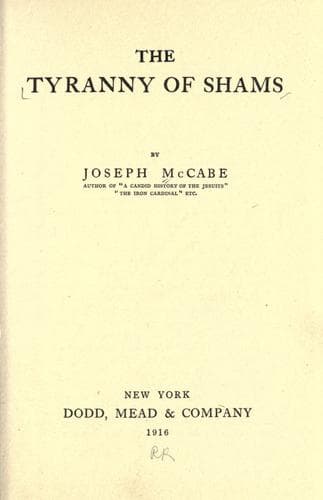
Great Britain -- Social conditions; Moral conditions; Social problems
When the new international tongue is ready, a few years will suffice
to make it prevail over the older languages in the leading countries
which helped to set up the commission. It will become the one speech
of the school, the press, commerce, law, government, and, possibly,
the church. The travelling public will, as every Esperantist knows, at
once discover the advantage. The commercial world will find it a
splendid economy and a priceless boon to international trade. A man
will be able to travel from London to Tokyo with as little difficulty
as from Woolwich to Ealing; and it will be found that when the foreign
tongue, which so instinctively suggests to us the uniform of an enemy,
has disappeared, one of the worst obstacles to mutual good-feeling
will be removed. When the Englishman can talk to the Berliner with
perfect ease,--I assume that all beginnings of dialect would be
suppressed as mercilessly as weeds in a well-kept garden,--just as a
citizen of London now talks with a citizen of New York or Sydney, a
very dangerous chasm will be bridged. It is quite certain that the
calamitous attitude of modern Germany could not have proceeded to such
a dangerous pitch if the Imperialist and other literature which is
responsible for it had been intelligible to the whole of Europe. A few
students of particular aspects of German life were more or less
acquainted with it, and we refused to believe then. Now we discover,
to our amazement, that a neighbouring nation has for decades been
openly educated up to a pitch of unscrupulous aggression, and the
world has been threatened with an incalculable catastrophe. I am not
overlooking the real reasons for this development, but I say
confidently that it would have been impossible if a national
literature were not generally confined within the nation which
produces it.
In the school the advantage would be very considerable. Our
overstrained and bespectacled children would be spared several hours a
day of their school-work or home-work. The whole ancient and
modern-language section of the curriculum would be suppressed, and
this suppression, with other reforms which I will describe later,
would enlarge the teacher's opportunity of giving real education and
spare the pupil a great deal of devastating brain-fag. For the
education of older people the gain would be almost as great. A
Birmingham artisan could read the latest novel of d'Annunzio or
latest play of Hauptmann without the assistance of expert or inexpert
translators. All the older literature that is worth preserving would
be translated by specially qualified interpreters into the new tongue,
and the originals would then become the toys of leisured pedants. If,
as I suggested, a proper attention to word-values were secured in the
making of the new tongue, there is no reason why it should not express
poetical sentiments as gracefully and pleasantly as any existing
tongue.
Public-domain text, read in full here on John Shaqi.
Reviews
Reviews
No reviews yet
Be the first to share your thoughts on this work.
Join the Discussion
Join the discussion
Sign in to leave a comment or review.
Sign InorCreate an account