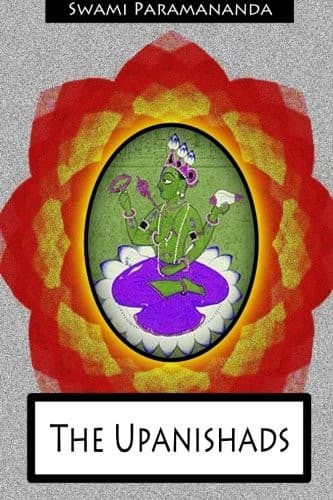
Mysticism -- Hinduism; Religion; Sanskrit literature -- Translations into English
There is no consensus of opinion regarding the place of this
Upanishad in Vedic literature. Some authorities declare it to
belong to the Yajur-Veda, others to the Sama-Veda, while a large
number put it down as a part of the Atharva-Veda. The story is
first suggested in the Rig-Veda; it is told more definitely in
the Yajur-Veda; and in the Katha-Upanishad it appears fully
elaborated and interwoven with the loftiest Vedic teaching.
There is nothing however, to indicate the special place of this
final version, nor has any meaning been found for the name Katha.
The text presents a dialogue between an aspiring disciple,
Nachiketas, and the Ruler of Death regarding the great Hereafter.
Katha-Upanishad
Peace Chant
May He (the Supreme Being) protect us both, teacher and taught.
May He be pleased with us. May we acquire strength. May our
study bring us illumination. May there be no enmity among us.
OM! PEACE! PEACE! PEACE!
Part First
I
Vahasrava, being desirous of heavenly rewards (at the Viswajit
sacrifice), made a gift of all that he possessed. He had a son
by the name of Nachiketas.
II
When the offerings were being distributed, faith (Shraddha)
entered (the heart of) Nachiketas, who, though young, yet
resected:
III
These cows have drunk water, eaten grass and given milk for the
last time, and their senses have lost all vigour. He who gives
these undoubtedly goes to joyless realms.
In India the idea of sacrifice has always been to give freely for the joy of
giving, without asking anything in return; and the whole purpose and merit of
the sacrifice is lost, if the giver entertains the least thought of name, fame
or individual benefit. The special Viswajit sacrifice which Vajasrava was
making required of him to give away all that he possessed. When, however, the
gifts were brought forward to be offered, his son Nachiketas, although
probably a lad about twelve years of age, observed how worthless were the
animals which his father was offering. His heart at once became filled with
Shraddha. There is no one English word which can convey the meaning of this
Sanskrit term. It is more than mere faith. It also implies self-reliance, an
independent sense of right and wrong, and the courage of one's own conviction.
As a boy of tender age, Nachiketas had no right to question his father's
action; yet, impelled by the sudden awakening of his higher nature, he could
not but reflect: "By merely giving these useless cows, my father cannot gain
any merit. If he has vowed to give all his possessions, then he must also
give me. Otherwise his sacrifice will not be complete and fruitful."
Therefore, anxious for his father's welfare, he approached him gently and
reverently.
IV
He said to his father: Dear father, to whom wilt thou give me?
He said it a second time, then a third time. The father replied:
I shall give thee unto Death.
Public-domain text, read in full here on John Shaqi.
Reviews
Reviews
No reviews yet
Be the first to share your thoughts on this work.
Join the Discussion
Join the discussion
Sign in to leave a comment or review.
Sign InorCreate an account