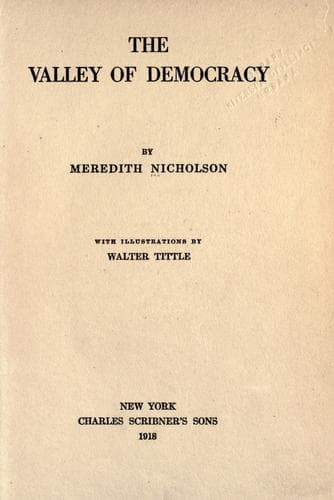
Mississippi River Valley -- Social life and customs
There is no other region in America where so much history has been
crowded into so brief a period, where young commonwealths so quickly
attained political power and influence as in the Middle West; but
the founding of States and the establishment of law is hardly more
interesting than the transfer to the wilderness of the dignities and
amenities of life. From the verandas of country clubs or handsome
villas scattered along the Great Lakes, one may almost witness the
receding pageant of discovery and settlement. In Wisconsin and Michigan
the golfer in search of an elusive ball has been known to stumble upon
an arrow-head, a significant reminder of the newness of the land; and
the motorist flying across Ohio, Indiana, and Illinois sees log cabins
that survive from the earliest days, many of them still occupied.
Present comfort and luxury are best viewed against a background of
pioneer life; at least the sense of things hoped for and realized in
these plains is more impressive as one ponders the self-sacrifice and
heroism by which the soil was conquered and peopled. The friendliness,
the eagerness to serve that are so charming and winning in the West
date from those times when one who was not a good neighbor was a
potential enemy. Social life was largely dependent upon exigencies that
brought the busy pioneers together, to cut timber, build homes, add a
barn to meet growing needs, or to assist in “breaking” new acres. The
women, eagerly seizing every opportunity to vary the monotony of their
lonely lives, gathered with the men, and while the axes swung in the
woodland or the plough turned up the new soil, held a quilting, spun
flax, made clothing, or otherwise assisted the hostess to get ahead
with her never-ending labors. To-day, throughout the broad valley
the grandchildren and great-grandchildren of the pioneers ply the
tennis-racket and dance in country club-houses beside lakes and rivers
where their forebears drove the plough or swung the axe all day, and
rode miles to dance on a puncheon floor. There was marrying and giving
in marriage; children were born and “raised” amid conditions that cause
one to smile at the child-welfare and “better-baby” societies of these
times. The affections were deepened by the close union of the family in
the intimate association of common tasks. Here, indeed, was a practical
application of the dictum of one for all and all for one.
Public-domain text, read in full here on John Shaqi.
Reviews
Reviews
No reviews yet
Be the first to share your thoughts on this work.
Join the Discussion
Join the discussion
Sign in to leave a comment or review.
Sign InorCreate an account