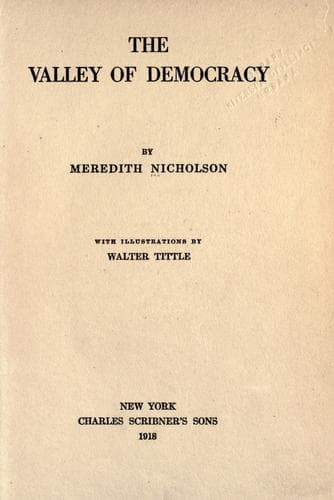
Mississippi River Valley -- Social life and customs
Perhaps I may here safely record my impatience of the pretension that
provincialism is anywhere admirable. A provincial character may be
interesting and amusing as a type; he may be commendably curious about
a great number of things and even possess considerable information,
without being blessed with the vision to correlate himself with the
world beyond the nearest haystack. I do not share the opinion of some
of my compatriots of the Western provinces that our speech is really
the standard English, that the Western voice is impeccable, or that
culture and manners have attained among us any noteworthy dignity
that entitles us to strut before the rest of the world. Culture is
not a term to be used lightly, and culture, as, say, Matthew Arnold
understood it and labored to extend its sphere, is not more respected
in these younger States than elsewhere in America. We are offering
innumerable vehicles of popular education; we point with pride to
public schools, State and privately endowed universities, and to
smaller colleges of the noblest standards and aims; but, even with
these so abundantly provided, it cannot be maintained that culture
in its strict sense cries insistently to the Western imagination.
There are people of culture, yes; there are social expressions both
interesting and charming; but our preoccupations are mainly with the
utilitarian, an attitude wholly defensible and explainable in the
light of our newness, the urgent need of bread-winning in our recent
yesterdays. However, with the easing in the past fifty years of the
conditions of life there followed quite naturally a restlessness,
an eagerness to fill and drain the cup of enjoyment, that was only
interrupted by our entrance into the world war. There are people, rich
and poor, in these States who are devotedly attached to “whatsoever
things are lovely,” but that they exert any wide influence or color
deeply the social fabric is debatable. It is possible that “sweetness
and light,” as we shall ultimately attain them, will not be an
efflorescence of literature or the fine arts, but a realization of
justice, highly conceived, and a perfected system of government that
will assure the happiness, contentment, and peace of the great body of
our citizenry.
Public-domain text, read in full here on John Shaqi.
Reviews
Reviews
No reviews yet
Be the first to share your thoughts on this work.
Join the Discussion
Join the discussion
Sign in to leave a comment or review.
Sign InorCreate an account