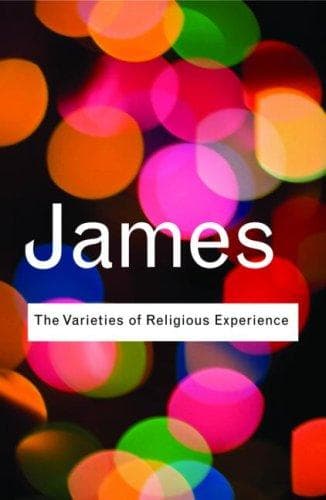
The Varieties of Religious Experience: A Study in Human NatureJames, William
ReligionComparative
The Varieties of Religious Experience: A Study in Human Nature
James, William
Conversion; Experience (Religion); Philosophy and religion; Psychology, Religious; Religion
‐‐‐‐‐‐‐‐‐‐‐‐‐‐‐‐‐‐‐‐‐‐‐‐‐‐‐‐‐‐‐‐‐‐‐‐‐
In the Christian church there have always been mystics. Although many of
them have been viewed with suspicion, some have gained favor in the eyes
of the authorities. The experiences of these have been treated as
precedents, and a codified system of mystical theology has been based upon
them, in which everything legitimate finds its place.(248) The basis of
the system is “orison” or meditation, the methodical elevation of the soul
towards God. Through the practice of orison the higher levels of mystical
experience may be attained. It is odd that Protestantism, especially
evangelical Protestantism, should seemingly have abandoned everything
methodical in this line. Apart from what prayer may lead to, Protestant
mystical experience appears to have been almost exclusively sporadic. It
has been left to our mind‐curers to reintroduce methodical meditation into
our religious life.
The first thing to be aimed at in orison is the mind’s detachment from
outer sensations, for these interfere with its concentration upon ideal
things. Such manuals as Saint Ignatius’s Spiritual Exercises recommend the
disciple to expel sensation by a graduated series of efforts to imagine
holy scenes. The acme of this kind of discipline would be a semi‐
hallucinatory mono‐ideism—an imaginary figure of Christ, for example,
coming fully to occupy the mind. Sensorial images of this sort, whether
literal or symbolic, play an enormous part in mysticism.(249) But in
certain cases imagery may fall away entirely, and in the very highest
raptures it tends to do so. The state of consciousness becomes then
insusceptible of any verbal description. Mystical teachers are unanimous
as to this. Saint John of the Cross, for instance, one of the best of
them, thus describes the condition called the “union of love,” which, he
says, is reached by “dark contemplation.” In this the Deity compenetrates
the soul, but in such a hidden way that the soul—
Public-domain text, read in full here on John Shaqi.
Reviews
Reviews
No reviews yet
Be the first to share your thoughts on this work.
Elsewhere in the archive
Join the Discussion
Join the discussion
Sign in to leave a comment or review.
Sign InorCreate an account