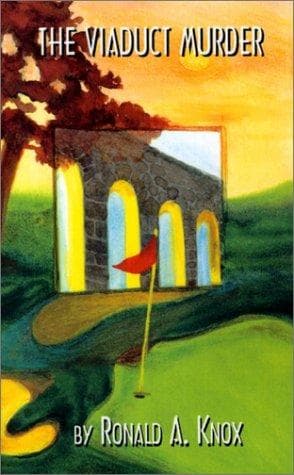
Detective and mystery stories; England -- Fiction; Murder -- Investigation -- Fiction
The others turned, in all the irritation of an interrupted train of
thought, to find him staring at the photograph as if in horror. Then
he stepped quickly across to the lamp, and turned it sideways so as to
throw the light full on the wall. And then they too turned a little
pale. The photograph had smiled.
There was, to be sure, only the faintest flicker of a smile on the
lips; you could not give any formula of it or trace the lines of it.
And yet it was the simultaneous impression of these four men that the
whole character, the whole impression of the face before them had
changed while they had played three hands of bridge. The whole face
was indefinably more human and more beautiful; but you could not say
why.
“Oh, for God’s sake let’s give the beastly thing up!” cried Marryatt.
“It doesn’t do to meddle with these things; one doesn’t know what
one’s up against. Reeves, I know it hurts your vanity to leave an
inquiry half-finished, but I’m sure it’s a mistake to go on.
Brotherhood, you know—he wasn’t quite canny; I always thought there
was something uncanny about him. Do let’s give it up.”
“The thing isn’t possible,” said Reeves slowly. “It’s the difference
of the light, I think; the light wasn’t so strong downstairs. It’s
funny how one can imagine these things.”
“I was never in a haunted house myself,” said Carmichael, “but I
remember very well the College used to own land at Luttercombe, where
the De Mumfords lived, don’t you know, and our old Bursar always
insisted that he heard screams in the night when he slept there. I
don’t believe in these things myself, though; fancy can play such
extraordinary tricks.”
“But look here, we all noticed the difference,” objected Marryatt.
“Well, there is such a thing as collective hallucination. Somebody
tells us the face looks grave, and our imagination reads gravity into
it; and then somebody says it’s changed, and we can’t see the gravity
there any longer.”
“That’s it,” said Reeves, who was pouring himself out a stiff
whisky-and-soda. “It’s collective hallucination. Must be.”
It was characteristic of Gordon that, without expressing any opinion,
he had been the only one of the four who quite liked to go up and
touch the photograph. He held it now close under the light, and looked
at it from different angles.
“I’m hanged if it doesn’t look different,” he said at last.
“Sympathetic ink? No, that’s nonsense. But it’s a dashed rum thing,
photography: I wonder if the heat of the room can have brought out
some bit of shadow on the face that wasn’t visible before?”
“A damp spot possibly,” said Reeves, “which has faded out. It was
rather close to the fire. Oh, what’s the good of worrying? Let’s all
go to bed. I’m going to lock the thing up in the drawer here; and we
can have another look at it in the morning. We’re all over-excited.”
Public-domain text, read in full here on John Shaqi.
Reviews
Reviews
No reviews yet
Be the first to share your thoughts on this work.
Join the Discussion
Join the discussion
Sign in to leave a comment or review.
Sign InorCreate an account