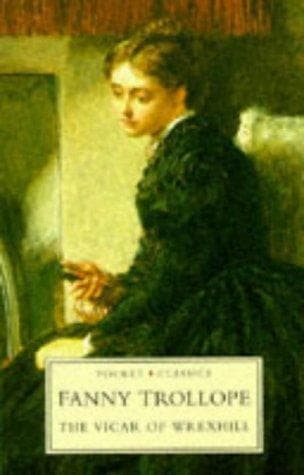
Clergy -- Fiction; Great Britain -- Fiction; Religious fiction
There is in the domestic history of human life no cause productive of
effects so terrible as the habit of acting according to the impulse, or
the convenience, of the moment, without fully considering the effect
what we are doing may produce on others.
Mrs. Mowbray, in waiting till Charles left the room before she spake to
Mr. Corbold of the title-deeds and other papers which she was to put
into his hands, was almost wholly actuated by the consciousness that the
attorney she was employing (though a serious) was a very vulgar man. She
knew that her son was rather fastidious on such points; and she disliked
the idea that a man, whose distinguished piety rendered him so
peculiarly eligible as a man of business, should, at his first
introduction to the confidential situation she intended he should hold,
lay himself open to the ridicule of a youth, who, she sighed to think,
was as yet quite incapable of appreciating his merit in any way.
If any secondary motive mixed with this, it arose from the averseness
she felt, of which she was not herself above half conscious, that any
one should hear advice given by Mr. Cartwright, who might think
themselves at liberty to question it; but, with all this, she never
dreamed of the pain she was giving to Charles's heart. She dreamed not
that her son,--her only son,--with a heart as warm, as generous, as
devoted in its filial love, as ever beat in the breast of a man, felt
all his ardent affection for her,--his proud fond wish of being her
protector, her aid, her confidential friend--now checked and chilled at
once, and for ever!
This consequence of her cold, restrained manner in his presence, was so
natural,--in fact, so inevitable,--that had she turned her eyes from
herself and her own little unimportant feelings, to what might be their
effect upon his, it is hardly possible that she could have avoided
catching some glimpse of the danger she ran,--and much after misery
might have been spared; as it was, she felt a movement of unequivocal
satisfaction when he departed; and, having told Fanny to join the other
young ladies while she transacted business, she was left alone with the
two gentlemen, and, in a few minutes afterwards, the contents of her
late husband's strong-box, consisting of parchments, memoranda, and
deeds almost innumerable, overspread the large table, as well as every
sofa and chair within convenient reach.
The two serious gentlemen smiled, but it was inwardly. Their eyes ran
over the inscription of every precious packet; and if those of the
professional man caught more rapidly at a glance the respective
importance of each, the vicar had the advantage of him in that prophetic
feeling of their future importance to himself, which rendered the
present hour one of the happiest of his life.
Public-domain text, read in full here on John Shaqi.
Reviews
Reviews
No reviews yet
Be the first to share your thoughts on this work.
Elsewhere in the archive
Join the Discussion
Join the discussion
Sign in to leave a comment or review.
Sign InorCreate an account