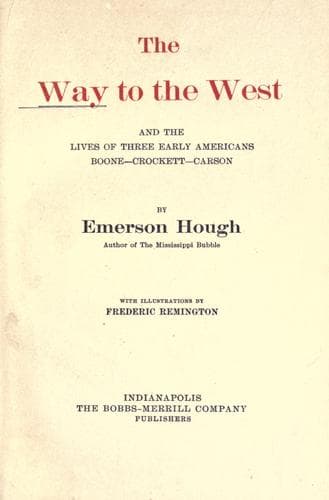
The Way to the West, and the Lives of Three Early Americans: Boone—Crockett—CarsonHough, Emerson
History
The Way to the West, and the Lives of Three Early Americans: Boone—Crockett—Carson
Hough, Emerson
Boone, Daniel, 1734-1820; Carson Kit, 1809-1868; Crockett, Davy, 1786-1836; Mississippi River Valley -- History; West (U.S.) -- History
The West of the midway district between the Missouri and Pacific was
largely settled by reflex. The mines of California spilled back men,
great, splendid men, to the eastward again, to exploit all those ranges
of the Rockies whose wealth the trappers had not suspected. Montana,
Idaho, Colorado, Nevada—all these might be called a part of the scheme
of California. New and splendid empires were founded, new standards of
civilization were erected in the recent wilderness. The grand and
alluring story of the West went on apace for yet a little time.
But these times were not to endure. There came swiftly the Western rush
of population, which swept off the map the free lands of all our Western
empire. The vast American public, mad with the lust of land, raped the
Indian reservations from those that had frail title given them in the
honor of a great nation; so that thus one more bar was broken between
the East and the West. Home-building, farm-making man came close on the
heels of trapper and trader and nomad cattle driver. The hordes of the
land seekers held their lotteries even in the desert once dreaded by the
travelers of the old Santa Fé trail. Incipient cities were built in that
waterless waste where Jedediah Smith, the first transcontinental
traveler, lost his life in mid-continent. Never a bit of open land was
left in all the West; or if there were such land remaining, it was of a
quality that would once have been viewed with contempt.
The story of the swift changes wrought by the iron trails is such as not
to afford complete satisfaction in the contemplation; yet we may calmly
review the different stages of that story. First we had the day of
competitive railway building, when there were not enough railroads for
the demands of a vast and unsettled region whose resources appealed to a
population. Then we came rapidly to the time of too many railroads; of
attempts to adjust an unprofitable competition; of combinations, of
arrangements, agreements, mergers; and of popular and governmental
action upon such mergers. To-day all America is districted and divided
among a few great railway systems. Once we were better than our
transportation; now we are not so good. Once we depended upon it; now it
rules us almost without argument. The swiftness with which these
tremendous changes have been brought about furnishes one of the most
remarkable phenomena recorded in the history of the world.
Public-domain text, read in full here on John Shaqi.
Reviews
Reviews
No reviews yet
Be the first to share your thoughts on this work.
Elsewhere in the archive
Join the Discussion
Join the discussion
Sign in to leave a comment or review.
Sign InorCreate an account