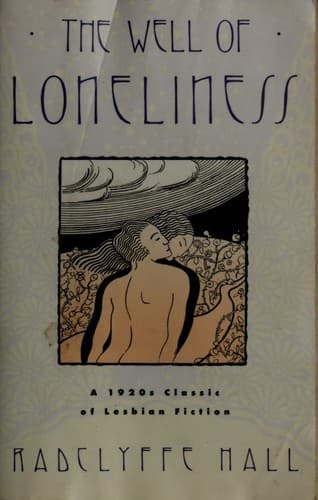
Lesbians -- England -- Social conditions -- Fiction
And Stephen answered her: ‘Mary—’
Then they stood very still, grown abruptly silent. And each of them felt
a little afraid, for the realization of great mutual love can at times
be so overwhelming a thing, that even the bravest of hearts may grow
fearful. And although they could not have put it into words, could not
have explained it to themselves or to each other, they seemed at that
moment to be looking beyond the turbulent flood of earthly passion; to
be looking straight into the eyes of a love that was changed—a love
made perfect, discarnate.
But the moment passed and they drew together. . . .
2
The spring they had left behind in Orotava overtook them quite soon, and
one day there it was blowing softly along the old streets of the
Quarter—the Rue de Seine, the Rue des Saints Pères, the Rue Bonaparte
and their own Rue Jacob. And who can resist the first spring days in
Paris? Brighter than ever looked the patches of sky when glimpsed
between rows of tall, flat-bosomed houses. From the Pont des Arts could
be seen a river that was one wide, ingratiating smile of sunshine; while
beyond in the Rue des Petits Champs, spring ran up and down the Passage
Choiseul, striking gleams of gold from its dirty glass roof—the roof
that looks like the vertebral column of some prehistoric monster.
All over the Bois there was bursting of buds—a positive orgy of growth
and greenness. The miniature waterfall lifted its voice in an effort to
roar as loud as Niagara. Birds sang. Dogs yapped or barked or bayed
according to their size and the tastes of their owners. Children
appeared in the Champs Elysées with bright coloured balloons which tried
to escape and which, given the ghost of a chance, always did so. In the
Tuileries Gardens boys with brown legs and innocent socks were hiring
toy boats from the man who provided Bateaux de Location. The fountains
tossed clouds of spray into the air, and just for fun made an occasional
rainbow; then the Arc de Triomphe would be seen through an arc that was,
thanks to the sun, even more triumphal. As for the very old lady in her
kiosk—the one who sells bocks, groseille, limonade, and such simple
food-stuffs as brioches and croissants—as for her, she appeared in a
new frilled bonnet and a fine worsted shawl on one memorable Sunday.
Smiling she was too, from ear to ear, in spite of the fact that her
mouth was toothless, for this fact she only remembered in winter when
the east wind started her empty gums aching.
Under the quiet, grey wings of the Madeleine the flower-stalls were
bright with the glory of God—anemones, jonquils, daffodils, tulips;
mimosa that left gold dust on the fingers, and the faintly perfumed
ascetic white lilac that had come in the train from the Riviera. There
were also hyacinths, pink, red and blue, and many small trees of sturdy
azalea.
Public-domain text, read in full here on John Shaqi.
Reviews
Reviews
No reviews yet
Be the first to share your thoughts on this work.
Elsewhere in the archive
Join the Discussion
Join the discussion
Sign in to leave a comment or review.
Sign InorCreate an account