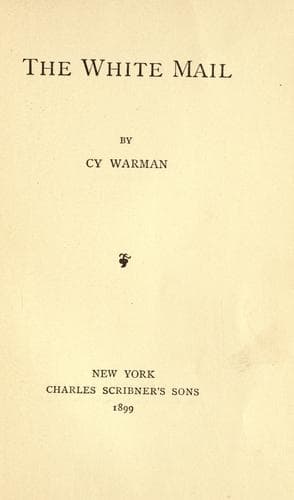
American fiction -- 19th century; Railroad stories
THE new station agent at Plainfield saw the sun rise on the morrow
of his first night on the plains. He had watched it sinking in
the sage-covered Sahara on the previous evening with a feeling of
loneliness, and now he welcomed the return of day with all the
enthusiasm of his youthful nature. He almost enjoyed the novelty of
preparing his own breakfast, of bread, bacon, and black coffee. A long
freight lumbered by, and the conductor, hanging low from the corner
of the way-car, dropped off a delay report, and the operator scanned
it eagerly. When the caboose had dropped from the horizon he sat down
and told Omaha how a dragging brake-beam had ditched a car of ore
and he was glad, for it gave him something to do and an opportunity
to show his usefulness; but he didn’t send that over the wire. He
busied himself putting things to rights in his bachelor home, and it
was noon before the day had seemed fairly begun. When the west-bound
passenger train came by the express car gave up a full kit of tools to
the station-master. An axe, a hammer, a saw, a pick and shovel, and a
case of eggs. The Union Pacific Company was liberal with the men who
helped them to open the great trail across the plains, and helped them
to keep it open. McGuire watched the train, as he had watched each and
every train that had come and gone since his arrival, until the rear
car sank below the level of the plain. When he prepared his supper his
little friend, the ground squirrel, came and sat in the door and ate
crumbs. When the shadows began to creep across the plain from the east
the agent sat by the door of his hut and watched the twilight deepen on
the dreary plain. Between him and the glow in the west that marked the
spot where the sun went down, he saw the same gaunt shadow that he had
seen limping across the face of the sun on the previous evening. Still
farther away he saw a horse outlined against the pink sky. Its rider
sat, a bunchy, bareheaded being, that might be half man and half bear.
The agent could make out that the horseman wore a blanket and feathers,
and that he was gazing at the little station. McGuire had been aiming
at the coyote when the Indian came up out of the west, where all things
seemed to come from, if we save the sun, and now, to show the skulking
Sioux that he was armed, he let go at the wolf. It was a long shot, but
the boy had aimed well, having the pink sky beyond, and the wolf leaped
high and fell dead, only a thousand feet from the Sioux. The Indian
having marked the performance of the marksman, turned his horse’s head
and rode slowly away to the north. The agent knew that the Government
troops had been battling with the Sioux over on Pole Creek, and made
no doubt that this was a scout from the dangerous tribe. He would have
reported the incident to Omaha, but he was afraid of being laughed at
over the wire by the other operators along the line. Sitting there in
the twilight he began to wonder what he should do if this Indian came
Public-domain text, read in full here on John Shaqi.
Reviews
Reviews
No reviews yet
Be the first to share your thoughts on this work.
Join the Discussion
Join the discussion
Sign in to leave a comment or review.
Sign InorCreate an account