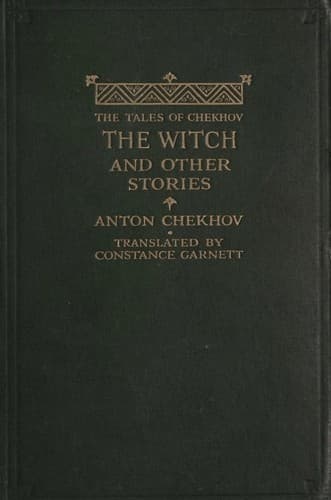
The Witch, and Other StoriesChekhov, Anton Pavlovich
General
The Witch, and Other Stories
Chekhov, Anton Pavlovich
Chekhov, Anton Pavlovich, 1860-1904 -- Translations into English; Russia -- Social life and customs -- Fiction; Short stories
They lay down to sleep in silence; and the old people, troubled and
excited by their reminiscences, thought how precious was youth, of
which, whatever it might have been like, nothing was left in the memory
but what was living, joyful, touching, and how terribly cold was death,
which was not far off, better not think of it! The lamp died down. And
the dusk, and the two little windows sharply defined by the moonlight,
and the stillness and the creak of the cradle, reminded them for some
reason that life was over, that nothing one could do would bring it
back.... You doze off, you forget yourself, and suddenly someone touches
your shoulder or breathes on your cheek--and sleep is gone; your body
feels cramped, and thoughts of death keep creeping into your mind. You
turn on the other side: death is forgotten, but old dreary, sickening
thoughts of poverty, of food, of how dear flour is getting, stray
through the mind, and a little later again you remember that life is
over and you cannot bring it back....
“Oh, Lord!” sighed the cook.
Someone gave a soft, soft tap at the window. It must be Fyokla come
back. Olga got up, and yawning and whispering a prayer, opened the door,
then drew the bolt in the outer room, but no one came in; only from the
street came a cold draught and a sudden brightness from the moonlight.
The street, still and deserted, and the moon itself floating across the
sky, could be seen at the open door.
“Who is there?” called Olga.
“I,” she heard the answer--“it is I.”
Near the door, crouching against the wall, stood Fyokla, absolutely
naked. She was shivering with cold, her teeth were chattering, and in
the bright moonlight she looked very pale, strange, and beautiful. The
shadows on her, and the bright moonlight on her skin, stood out vividly,
and her dark eyebrows and firm, youthful bosom were defined with
peculiar distinctness.
“The ruffians over there undressed me and turned me out like this,” she
said. “I’ve come home without my clothes... naked as my mother bore me.
Bring me something to put on.”
“But go inside!” Olga said softly, beginning to shiver, too.
“I don’t want the old folks to see.” Granny was, in fact, already
stirring and muttering, and the old father asked: “Who is there?” Olga
brought her own smock and skirt, dressed Fyokla, and then both went
softly into the inner room, trying not to make a noise with the door.
“Is that you, you sleek one?” Granny grumbled angrily, guessing who it
was. “Fie upon you, nightwalker!... Bad luck to you!”
“It’s all right, it’s all right,” whispered Olga, wrapping Fyokla up;
“it’s all right, dearie.”
All was stillness again. They always slept badly; everyone was kept
awake by something worrying and persistent: the old man by the pain in
his back, Granny by anxiety and anger, Marya by terror, the children by
itch and hunger. Now, too, their sleep was troubled; they kept turning
over from one side to the other, talking in their sleep, getting up for
a drink.
Public-domain text, read in full here on John Shaqi.
Reviews
Reviews
No reviews yet
Be the first to share your thoughts on this work.
Elsewhere in the archive
Join the Discussion
Join the discussion
Sign in to leave a comment or review.
Sign InorCreate an account