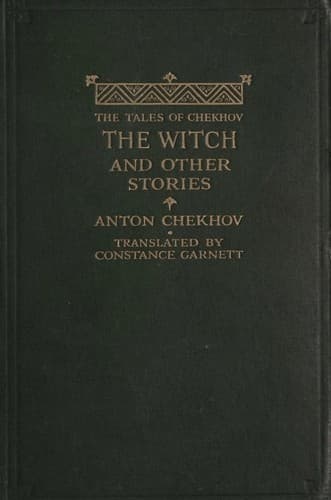
The Witch, and Other StoriesChekhov, Anton Pavlovich
General
The Witch, and Other Stories
Chekhov, Anton Pavlovich
Chekhov, Anton Pavlovich, 1860-1904 -- Translations into English; Russia -- Social life and customs -- Fiction; Short stories
Fyokla suddenly broke into a loud, coarse howl, but immediately checked
herself, and only uttered sobs from time to time, growing softer and on
a lower note, until she relapsed into silence. From time to time from
the other side of the river there floated the sound of the beating of
the hours; but the time seemed somehow strange--five was struck and then
three.
“Oh Lord!” sighed the cook.
Looking at the windows, it was difficult to tell whether it was still
moonlight or whether the dawn had begun. Marya got up and went out, and
she could be heard milking the cows and saying, “Stea-dy!” Granny went
out, too. It was still dark in the hut, but all the objects in it could
be discerned.
Nikolay, who had not slept all night, got down from the stove. He took
his dress-coat out of a green box, put it on, and going to the window,
stroked the sleeves and took hold of the coat-tails--and smiled. Then he
carefully took off the coat, put it away in his box, and lay down again.
Marya came in again and began lighting the stove. She was evidently
hardly awake, and seemed dropping asleep as she walked. Probably she had
had some dream, or the stories of the night before came into her mind
as, stretching luxuriously before the stove, she said:
“No, freedom is better.”
VII
The master arrived--that was what they called the police inspector. When
he would come and what he was coming for had been known for the last
week. There were only forty households in Zhukovo, but more than two
thousand roubles of arrears of rates and taxes had accumulated.
The police inspector stopped at the tavern. He drank there two glasses
of tea, and then went on foot to the village elder’s hut, near which
a crowd of those who were in debt stood waiting. The elder, Antip
Syedelnikov, was, in spite of his youth--he was only a little over
thirty--strict and always on the side of the authorities, though he
himself was poor and did not pay his taxes regularly. Evidently he
enjoyed being elder, and liked the sense of authority, which he could
only display by strictness. In the village council the peasants were
afraid of him and obeyed him. It would sometimes happen that he would
pounce on a drunken man in the street or near the tavern, tie his hands
behind him, and put him in the lock-up. On one occasion he even put
Granny in the lock-up because she went to the village council instead
of Osip, and began swearing, and he kept her there for a whole day and
night. He had never lived in a town or read a book, but somewhere or
other had picked up various learned expressions, and loved to make use
of them in conversation, and he was respected for this though he was not
always understood.
Public-domain text, read in full here on John Shaqi.
Reviews
Reviews
No reviews yet
Be the first to share your thoughts on this work.
Elsewhere in the archive
Join the Discussion
Join the discussion
Sign in to leave a comment or review.
Sign InorCreate an account