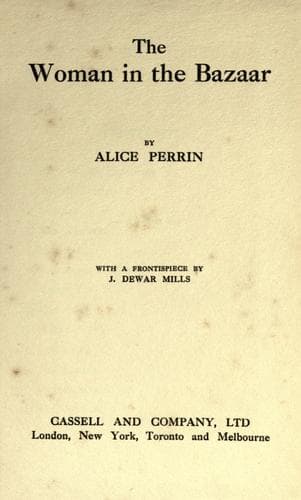
British -- India -- Fiction; India -- Social life and customs -- Fiction
* * * * *
That evening Mrs. Greaves turned over the pages of a fashion paper in a
corner of the club. It was previous to the days when "going to the club"
had ceased to be a popular proceeding; it was not yet considered more
civilised to go home with a few particular friends for the interval
before dinner. The ladies' room was filled with groups of people
refreshing themselves with tea after healthy exercise afoot or on
horseback, or on the river, and the lofty building resounded with voices
and laughter. The hot weather was within measurable distance, but the
days were still pleasant, and the general exodus to the hills had not
begun. The tennis courts in the public gardens were crowded every
evening, the bandstand well surrounded, the Mall lively with riders and
drivers; and the last ball of the season had yet to take place.
Mrs. Greaves had played four sets of tennis, and now she was waiting for
her husband to join her from the polo ground.
Two women seated themselves at a tea-table just in front of her, and
though she was absorbed in making up her mind whether to send home for
one of the seductive blouses sketched on the advertisement page of the
paper, she heard, unavoidably, scraps of their talk. First they
discussed the ball that the bachelors of the station were giving next
night in return for hospitality extended to them throughout the cold
weather by the married members of the community. It was, they believed,
to be an exceptionally brilliant affair; the supper was to include
pomfrets from Bombay, and confections from Peliti's--the Buszard of
India. From this they went on to the subject of their gowns for the
ball.
Then one of them said: "Look! There's Mrs. Coventry, and, needless to
say, Mr. Kennard."
The other looked up sharply; so did Mrs. Greaves, and this was the
conversation that reached her unwilling ears.
"Did you ever see such a change in anyone? You weren't here when she
came out as a bride? No, of course, I remember, you were at home. I
assure you she looked like a Salvation Army lass, or a charity school
girl, her hair dragged back in a knob like a door-handle, and _hideous_
clothes. She would hardly speak to a man, and was horrified at
everything and everybody. And now behold her, with a fringe, and dressed
as well as anyone in the place, and, of all men, the irresistible Mr.
Kennard in attendance. The boys' brigade appears to have been disbanded
in his favour. He likes the field to himself."
"What will be the end of it, do you think?"
Public-domain text, read in full here on John Shaqi.
Reviews
Reviews
No reviews yet
Be the first to share your thoughts on this work.
Join the Discussion
Join the discussion
Sign in to leave a comment or review.
Sign InorCreate an account