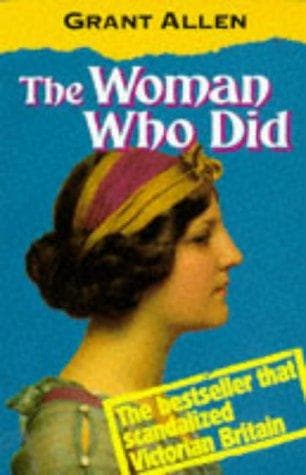
Domestic fiction; England -- Fiction; Feminists -- Fiction; Mothers and daughters -- Fiction; Women -- England -- Fiction
“It came to me all at once when I was about sixteen,” Herminia answered
with quiet composure, like one who remarks upon some objective fact of
external nature. “It came to me in listening to a sermon of my
father’s—which I always look upon as one more instance of the force of
heredity. He was preaching on the text, ‘The Truth shall make you
Free,’ and all that he said about it seemed to me strangely alive, to
be heard from a pulpit. He said we ought to seek the Truth before all
things, and never to rest till we felt sure we had found it. We should
not suffer our souls to be beguiled into believing a falsehood merely
because we wouldn’t take the trouble to find out the Truth for
ourselves by searching. We must dig for it; we must grope after it. And
as he spoke, I made up my mind, in a flash of resolution, to find out
the Truth for myself about everything, and never to be deterred from
seeking it, and embracing it, and ensuing it when found, by any
convention or preconception. Then he went on to say how the Truth would
make us Free, and I felt he was right. It would open our eyes, and
emancipate us from social and moral slaveries. So I made up my mind, at
the same time, that whenever I found the Truth I would not scruple to
follow it to its logical conclusions, but would practise it in my life,
and let it make me Free with perfect freedom. Then, in search of Truth,
I got my father to send me to Girton; and when I had lighted on it
there half by accident, and it had made me Free indeed, I went away
from Girton again, because I saw if I stopped there I could never
achieve and guard my freedom. From that day forth I have aimed at
nothing but to know the Truth, and to act upon it freely; for, as
Tennyson says—
‘To live by law
Acting the law we live by without fear,
And because right is right to follow right,
Were wisdom in the scorn of consequence.’”
She broke off suddenly, and looking up, let her eye rest for a second
on the dark thread of clambering pines that crest the down just above
Brockham.
“This is dreadfully egotistical,” she cried, with a sharp little start.
“I ought to apologise for talking so much to you about my own
feelings.”
Alan gazed at her and smiled.
“Why apologise,” he asked, “for managing to be interesting? You are
not egotistical at all. What you are telling me is history—the history
of a soul, which is always the one thing on earth worth hearing. I take
it as a compliment that you should hold me worthy to hear it. It is a
proof of confidence. Besides,” he went on, after a second’s pause, “I
am a man; you are a woman. Under those circumstances, what would
otherwise be egotism becomes common and mutual. When two people
sympathise with one another, all they can say about themselves loses
its personal tinge and merges into pure human and abstract interest.”
Herminia brought back her eyes from infinity to his face.
Public-domain text, read in full here on John Shaqi.
Reviews
Reviews
No reviews yet
Be the first to share your thoughts on this work.
Join the Discussion
Join the discussion
Sign in to leave a comment or review.
Sign InorCreate an account