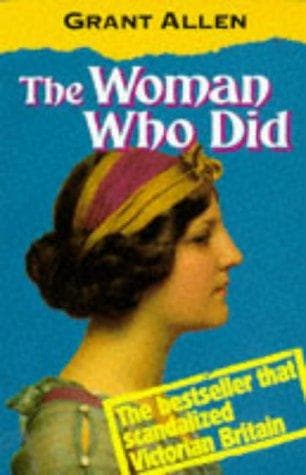
Domestic fiction; England -- Fiction; Feminists -- Fiction; Mothers and daughters -- Fiction; Women -- England -- Fiction
Still Herminia shook her head. “No, no,” she cried vehemently. “I deny
and decline those terms; they are part and parcel of a system of
slavery. I have learnt that the righteous soul should avoid all
appearance of evil. I will not palter and parley with the unholy thing.
Even though you go to a registry office and get rid as far as you can
of every relic of the sacerdotal and sacramental idea, yet the marriage
itself is still an assertion of man’s supremacy over woman. It ties her
to him for life, it ignores her individuality, it compels her to
promise what no human heart can be sure of performing; for you can
contract to do or not to do, easily enough, but contract to feel or not
to feel—what transparent absurdity! It is full of all evils, and I
decline to consider it. If I love a man at all, I must love him on
terms of perfect freedom. I can’t bind myself down to live with him to
my shame one day longer than I love him; or to love him at all if I
find him unworthy of my purest love, or unable to retain it; or if I
discover some other more fit to be loved by me. You admitted the other
day that all this was abstractly true; why should you wish this morning
to draw back from following it out to its end in practice?”
Alan was only an Englishman, and shared, of course, the inability of
his countrymen to carry any principle to its logical conclusion. He was
all for admitting that though things must really be so, yet it were
prudent in life to pretend they were otherwise. This is the well-known
English virtue of moderation and compromise; it has made England what
she is, the shabbiest, sordidest, worst organised of nations. So he
paused for a second and temporised. “It’s for your sake, Herminia,” he
said again; “I can’t bear to think of your making yourself a martyr.
And I don’t see how, if you act as you propose, you could escape
martyrdom.”
Herminia looked up at him with pleading eyes. Tears just trembled on
the edge of those glistening lashes. “It never occurred to me to
think,” she said gently but bravely, “my life could ever end in
anything else but martyrdom. It must needs be so with all true lives,
and all good ones. For whoever sees the truth, whoever strives
earnestly with all his soul to be good, must be raised many planes
above the common mass of men around him; he must be a moral pioneer,
and the moral pioneer is always a martyr. People won’t allow others to
be wiser and better than themselves, unpunished. They can forgive
anything except moral superiority. We have each to choose between
acquiescence in the wrong, with a life of ease, and struggle for the
right, crowned at last by inevitable failure. To succeed is to fail,
and failure is the only success worth aiming at. Every great and good
life can but end in a Calvary.”
Public-domain text, read in full here on John Shaqi.
Reviews
Reviews
No reviews yet
Be the first to share your thoughts on this work.
Join the Discussion
Join the discussion
Sign in to leave a comment or review.
Sign InorCreate an account