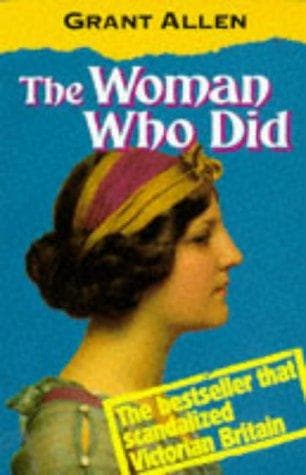
Domestic fiction; England -- Fiction; Feminists -- Fiction; Mothers and daughters -- Fiction; Women -- England -- Fiction
Mrs Dewsbury was right. It took those two but little time to feel quite
at home with one another. Built of similar mould, each seemed
instinctively to grasp what each was aiming at. Two or three turns
pacing up and down the lawn, two or three steps along the box-covered
path at the side, and they read one another perfectly. For he was true
man, and she was real woman.
“Then you were at Girton?” Alan asked, as he paused with one hand on
the rustic seat that looks up towards Leith Hill, and the heather-clad
moorland.
“Yes, at Girton,” Herminia answered, sinking easily upon the bench, and
letting one arm rest on the back in a graceful attitude of unstudied
attention. “But I didn’t take my degree,” she went on hurriedly, as one
who is anxious to disclaim some too great honour thrust upon her. “I
didn’t care for the life; I thought it cramping. You see, if we women
are ever to be free in the world, we must have in the end a freeman’s
education. But the education at Girton made only a pretence at freedom.
At heart, our girls were as enslaved to conventions as any girls
elsewhere. The whole object of the training was to see just how far you
could manage to push a woman’s education without the faintest danger of
her emancipation.”
“You are right,” Alan answered briskly, for the point was a pet one
with him. “I was an Oxford man myself, and I know that servitude. When
I go up to Oxford now and see the girls who are being ground in the
mill at Somerville, I’m heartily sorry for them. It’s worse for them
than for us; they miss the only part of university life that has
educational value. When we men were undergraduates, we lived our whole
lives, lived them all round, developing equally every fibre of our
natures. We read Plato, and Aristotle, and John Stuart Mill, to be
sure—and I’m not quite certain we got much good from them; but then our
talk and thought were not all of books, and of what we spelt out in
them. We rowed on the river, we played in the cricket-field, we lounged
in the billiard-rooms, we ran up to town for the day, we had wine in
one another’s rooms after hall in the evening, and behaved like young
fools, and threw oranges wildly at one another’s heads, and generally
enjoyed ourselves. It was all very silly and irrational, no doubt, but
it was life, it was reality; while the pretended earnestness of those
pallid Somerville girls is all an affectation of one-sided culture.”
“That’s just it,” Herminia answered, leaning back on the rustic seat
like David’s Madame Récamier. “You put your finger on the real blot
when you said those words, developing equally every fibre of your
natures. That’s what nobody yet wants us women to do. They’re trying
hard enough to develop us intellectually; but morally and socially they
want to mew us up just as close as ever. And they won’t succeed. The
zenana must go. Sooner or later, I’m sure, if you begin by educating
women, you must end by emancipating them.”
Public-domain text, read in full here on John Shaqi.
Reviews
Reviews
No reviews yet
Be the first to share your thoughts on this work.
Join the Discussion
Join the discussion
Sign in to leave a comment or review.
Sign InorCreate an account