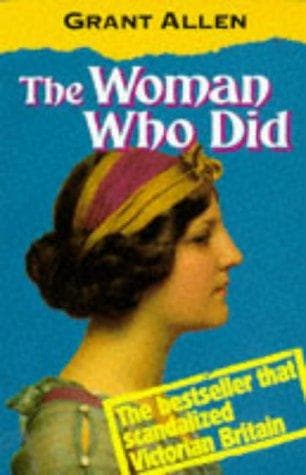
Domestic fiction; England -- Fiction; Feminists -- Fiction; Mothers and daughters -- Fiction; Women -- England -- Fiction
“So I think too,” Alan answered, growing every moment more interested.
“And for my part, it’s the emancipation, not the mere education, that
most appeals to me.”
“Yes, I’ve always felt that,” Herminia went on, letting herself out
more freely, for she felt she was face to face with a sympathetic
listener. “And for that reason, it’s the question of social and moral
emancipation that interests me far more than the mere political
one—woman’s rights as they call it. Of course I’m a member of all the
woman’s franchise leagues and everything of that sort—they can’t afford
to do without a single friend’s name on their lists at present; but the
vote is a matter that troubles me little in itself, what I want is to
see women made fit to use it. After all, political life fills but a
small and unimportant part in our total existence. It’s the perpetual
pressure of social and ethical restrictions that most weighs down
women.”
Alan paused and looked hard at her. “And they tell me,” he said in a
slow voice, “you’re the Dean of Dunwich’s daughter!”
Herminia laughed lightly—a ringing girlish laugh. Alan noticed it with
pleasure. He felt at once that the iron of Girton had not entered into
her soul, as into so many of our modern young women’s. There was
vitality enough left in her for a genuine laugh of innocent amusement.
“Oh yes,” she said, merrily; “that’s what I always answer to all
possible objectors to my ways and ideas. I reply with dignity, ‘_I_ was
brought up in the family of a clergyman of the Church of England.’”
“And what does the Dean say to your views?” Alan interposed doubtfully.
Herminia laughed again. If her eyes were profound, two dimples saved
her. “I thought you were with us,” she answered with a twinkle; “now, I
begin to doubt it. You don’t expect a man of twenty-two to be governed
in all things, especially in the formation of his abstract ideas, by
his father’s opinions. Why then a woman?”
“Why, indeed?” Alan answered. “There I quite agree with you. I was
thinking not so much of what is right and reasonable as of what is
practical and usual. For most women, of course, are—well, more or less
dependent upon their fathers.”
“But I am not,” Herminia answered, with a faint suspicion of just pride
in the undercurrent of her tone. “That’s in part why I went away so
soon from Girton. I felt that if women are ever to be free, they must
first of all be independent. It is the dependence of women that has
allowed men to make laws for them, socially and ethically. So I
wouldn’t stop at Girton, partly because I felt the life was
one-sided—our girls thought and talked of nothing else on earth except
Herodotus, trigonometry, and the higher culture—but partly also because
I wouldn’t be dependent on any man, not even my own father. It left me
freer to act and think as I would. So I threw Girton overboard, and
came up to live in London.”
Public-domain text, read in full here on John Shaqi.
Reviews
Reviews
No reviews yet
Be the first to share your thoughts on this work.
Join the Discussion
Join the discussion
Sign in to leave a comment or review.
Sign InorCreate an account