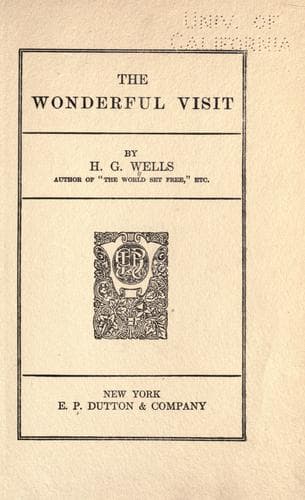
Angels -- Fiction; England -- Social life and customs -- 19th century -- Fiction; Fantasy fiction
Let us be plain. The Angel of this story is the Angel of Art, not the
Angel that one must be irreverent to touch--neither the Angel of
religious feeling nor the Angel of popular belief. The last we all know.
She is alone among the angelic hosts in being distinctly feminine: she
wears a robe of immaculate, unmitigated white with sleeves, is fair,
with long golden tresses, and has eyes of the blue of Heaven. Just a
pure woman she is, pure maiden or pure matron, in her _robe de nuit_,
and with wings attached to her shoulder blades. Her callings are
domestic and sympathetic, she watches over a cradle or assists a sister
soul heavenward. Often she bears a palm leaf, but one would not be
surprised if one met her carrying a warming-pan softly to some poor
chilly sinner. She it was who came down in a bevy to Marguerite in
prison, in the amended last scene in _Faust_ at the Lyceum, and the
interesting and improving little children that are to die young, have
visions of such angels in the novels of Mrs Henry Wood. This white
womanliness with her indescribable charm of lavender-like holiness, her
aroma of clean, methodical lives, is, it would seem after all, a purely
Teutonic invention. Latin thought knows her not; the old masters have
none of her. She is of a piece with that gentle innocent ladylike school
of art whereof the greatest triumph is "a lump in one's throat," and
where wit and passion, scorn and pomp, have no place. The white angel
was made in Germany, in the land of blonde women and the domestic
sentiments. She comes to us cool and worshipful, pure and tranquil, as
silently soothing as the breadth and calmness of the starlit sky, which
also is so unspeakably dear to the Teutonic soul.... We do her
reverence. And to the angels of the Hebrews, those spirits of power and
mystery, to Raphael, Zadkiel, and Michael, of whom only Watts has caught
the shadow, of whom only Blake has seen the splendour, to them too, do
we do reverence.
But this Angel the Vicar shot is, we say, no such angel at all, but the
Angel of Italian art, polychromatic and gay. He comes from the land of
beautiful dreams and not from any holier place. At best he is a popish
creature. Bear patiently, therefore, with his scattered remiges, and be
not hasty with your charge of irreverence before the story is read.
AT THE VICARAGE.
X.
The Curate's wife and her two daughters and Mrs Jehoram were still
playing at tennis on the lawn behind the Vicar's study, playing keenly
and talking in gasps about paper patterns for blouses. But the Vicar
forgot and came in that way.
They saw the Vicar's hat above the rhododendrons, and a bare curly head
beside him. "I must ask him about Susan Wiggin," said the Curate's wife.
She was about to serve, and stood with a racket in one hand and a ball
between the fingers of the other. "_He_ really ought to have gone to see
her--being the Vicar. Not George. I----_Ah!_"
Public-domain text, read in full here on John Shaqi.
Reviews
Reviews
No reviews yet
Be the first to share your thoughts on this work.
Join the Discussion
Join the discussion
Sign in to leave a comment or review.
Sign InorCreate an account