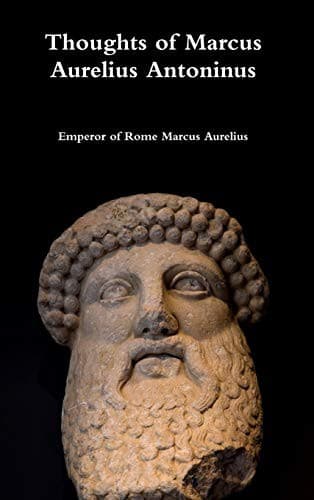
Thoughts of Marcus Aurelius AntoninusMarcus Aurelius, Emperor of Rome
PhilosophyPhilosophy
Thoughts of Marcus Aurelius Antoninus
Marcus Aurelius, Emperor of Rome
Ethics; Life; Marcus Aurelius, Emperor of Rome, 121-180; Stoics
33. What is that which as to this material [our life] can be done or
said in the way most conformable to reason? For whatever this may be, it
is in thy power to do it or to say it, and do not make excuses that thou
art hindered. Thou wilt not cease to lament till thy mind is in such a
condition that what luxury is to those who enjoy pleasure, such shall be
to thee, in the matter which is subjected and presented to thee, the
doing of the things which are conformable to man's constitution; for a
man ought to consider as an enjoyment everything which it is in his
power to do according to his own nature. And it is in his power
everywhere. Now, it is not given to a cylinder to move everywhere by its
own motion, nor yet to water nor to fire, nor to anything else which is
governed by nature or an irrational soul, for the things which check
them and stand in the way are many. But intelligence and reason are able
to go through everything that opposes them, and in such manner as they
are formed by nature and as they choose. Place before thy eyes this
facility with which the reason will be carried through all things, as
fire upwards, as a stone downwards, as a cylinder down an inclined
surface, and seek for nothing further. For all other obstacles either
affect the body only, which is a dead thing; or, except through opinion
and the yielding of the reason itself, they do not crush nor do any harm
of any kind; for if they did, he who felt it would immediately become
bad. Now, in the case of all things which have a certain constitution,
whatever harm may happen to any of them, that which is so affected
becomes consequently worse; but in the like case, a man becomes both
better, if one may say so, and more worthy of praise by making a right
use of these accidents. And finally remember that nothing harms him who
is really a citizen, which does not harm the state; nor yet does
anything harm the state, which does not harm law [order]; and of these
things which are called misfortunes not one harms law. What then does
not harm law does not harm either state or citizen.
34. To him who is penetrated by true principles even the briefest
precept is sufficient, and any common precept, to remind him that he
should be free from grief and fear. For example:--
"Leaves, some the wind scatters on the ground--
So is the race of men."[A]
Public-domain text, read in full here on John Shaqi.
Reviews
Reviews
No reviews yet
Be the first to share your thoughts on this work.
Elsewhere in the archive
Join the Discussion
Join the discussion
Sign in to leave a comment or review.
Sign InorCreate an account