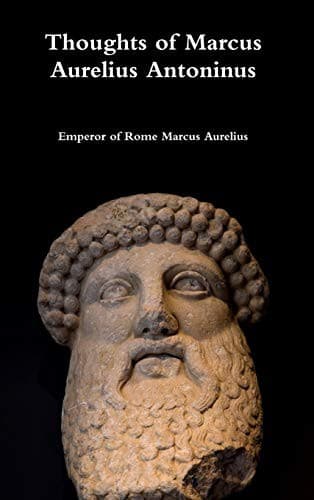
Thoughts of Marcus Aurelius AntoninusMarcus Aurelius, Emperor of Rome
PhilosophyPhilosophy
Thoughts of Marcus Aurelius Antoninus
Marcus Aurelius, Emperor of Rome
Ethics; Life; Marcus Aurelius, Emperor of Rome, 121-180; Stoics
Leaves, also, are thy children; and leaves, too, are they who cry out as
if they were worthy of credit and bestow their praise, or on the
contrary curse, or secretly blame and sneer; and leaves, in like manner,
are those who shall receive and transmit a man's fame to after-times.
For all such things as these "are produced in the season of spring," as
the poet says; then the wind casts them down; then the forest produces
other leaves in their places. But a brief existence is common to all
things, and yet thou avoidest and pursuest all things as if they would
be eternal. A little time, and thou shalt close thy eyes; and him who
has attended thee to thy grave another soon will lament.
[A] Homer, II., vi. 146.
35. The healthy eye ought to see all visible things and not to say, I
wish for green things; for this is the condition of a diseased eye. And
the healthy hearing and smelling ought to be ready to perceive all that
can be heard and smelled. And the healthy stomach ought to be with
respect to all food just as the mill with respect to all things which it
is formed to grind. And accordingly the healthy understanding ought to
be prepared for everything which happens; but that which says, Let my
dear children live, and let all men praise whatever I may do, is an eye
which seeks for green things, or teeth which seek for soft things.
36. There is no man so fortunate that there shall not be by him when he
is dying some who are pleased with what is going to happen.[A] Suppose
that he was a good and wise man, will there not be at least some one to
say to himself, Let us at last breathe freely, being relieved from this
schoolmaster? It is true that he was harsh to none of us, but I
perceived that he tacitly condemns us.--This is what is said of a good
man. But in our own case how many other things are there for which there
are many who wish to get rid of us? Thou wilt consider this, then, when
thou art dying, and thou wilt depart more contentedly by reflecting
thus: I am going away from such a life, in which even my associates in
behalf of whom I have striven so much, prayed, and cared, themselves
wish me to depart, hoping perchance to get some little advantage by it.
Why then should a man cling to a longer stay here? Do not, however, for
this reason go away less kindly disposed to them, but preserving thy own
character, and friendly and benevolent and mild, and on the other hand
not as if thou wast torn away; but as when a man dies a quiet death, the
poor soul is easily separated from the body, such also ought thy
departure from men to be, for nature united thee to them and associated
thee. But does she now dissolve the union? Well, I am separated as from
kinsmen, not however dragged resisting, but without compulsion; for
this, too, is one of the things according to nature.
Public-domain text, read in full here on John Shaqi.
Reviews
Reviews
No reviews yet
Be the first to share your thoughts on this work.
Elsewhere in the archive
Join the Discussion
Join the discussion
Sign in to leave a comment or review.
Sign InorCreate an account