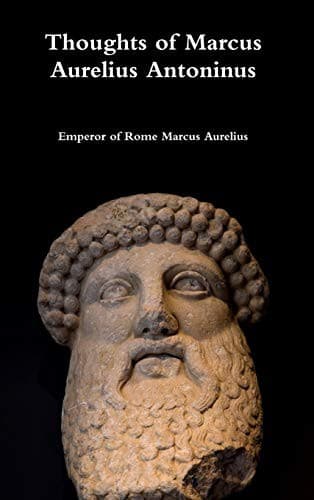
Thoughts of Marcus Aurelius Antoninus — John Shaqi
Thoughts of Marcus Aurelius AntoninusMarcus Aurelius, Emperor of Rome
PhilosophyPhilosophy
Thoughts of Marcus Aurelius Antoninus
Marcus Aurelius, Emperor of Rome
Ethics; Life; Marcus Aurelius, Emperor of Rome, 121-180; Stoics
Epictetus and Antoninus have had readers ever since they were first
printed. The little book of Antoninus has been the companion of some
great men. Machiavelli's Art of War and Marcus Antoninus were the two
books which were used when he was a young man by Captain John Smith, and
he could not have found two writers better fitted to form the character
of a soldier and a man. Smith is almost unknown and forgotten in
England, his native country, but not in America, where he saved the
young colony of Virginia. He was great in his heroic mind and his deeds
in arms, but greater still in the nobleness of his character. For a
man's greatness lies not in wealth and station, as the vulgar believe,
nor yet in his intellectual capacity, which is often associated with
the meanest moral character, the most abject servility to those in high
places, and arrogance to the poor and lowly; but a man's true greatness
lies in the consciousness of an honest purpose in life, founded on a
just estimate of himself and everything else, on frequent
self-examination, and a steady obedience to the rule which he knows to
be right, without troubling himself, as the emperor says he should not,
about what others may think or say, or whether they do or do not do that
which he thinks and says and does.
THE PHILOSOPHY
OF
MARCUS AURELIUS ANTONIUS
It has been said that the Stoic philosophy first showed its real value
when it passed from Greece to Rome. The doctrines of Zeno and his
successors were well suited to the gravity and practical good sense of
the Romans; and even in the Republican period we have an example of a
man, M. Cato Uticensis, who lived the life of a Stoic and died
consistently with the opinions which he professed. He was a man, says
Cicero, who embraced the Stoic philosophy from conviction; not for the
purpose of vain discussion, as most did, but in order to make his life
conformable to the Stoic precepts. In the wretched times from the death
of Augustus to the murder of Domitian, there was nothing but the Stoic
philosophy which could console and support the followers of the old
religion under imperial tyranny and amidst universal corruption. There
were even then noble minds that could dare and endure, sustained by a
good conscience and an elevated idea of the purposes of man's existence.
Such were Paetus Thrasae, Helvidius Priscus, Cornutus, C. Musonius
Rufus,[A] and the poets Persius and Juvenal, whose energetic language
and manly thoughts may be as instructive to us now as they might have
been to their contemporaries. Persius died under Nero's bloody reign;
but Juvenal had the good fortune to survive the tyrant Domitian and to
see the better times of Nerva, Trajan, and Hadrian.[B] His best precepts
are derived from the Stoic school, and they are enforced in his finest
verses by the unrivalled vigor of the Latin language.
Public-domain text, read in full here on John Shaqi.
Reviews
Reviews
No reviews yet
Be the first to share your thoughts on this work.
Join the Discussion
Join the discussion
Sign in to leave a comment or review.
Sign InorCreate an account