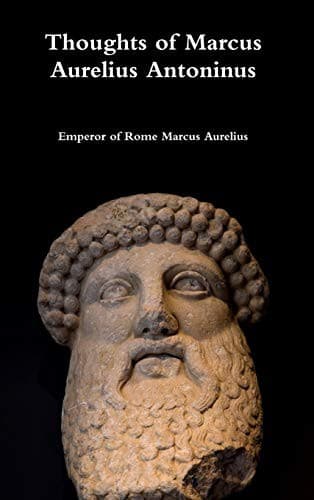
Thoughts of Marcus Aurelius AntoninusMarcus Aurelius, Emperor of Rome
PhilosophyPhilosophy
Thoughts of Marcus Aurelius Antoninus
Marcus Aurelius, Emperor of Rome
Ethics; Life; Marcus Aurelius, Emperor of Rome, 121-180; Stoics
so the soul may on leaving the body pass into another existence which is
perfect. I am not sure if this is the emperor's meaning. Butler compares
it with a passage in Strabo (p. 713) about the Brachmans' notion of
death being the birth into real life and a happy life, to those who have
philosophized; and he thinks Antoninus may allude to this opinion.[B]
[A] "All events come alike to all: there is one event to the
righteous and to the wicked: to the good and to the clean and
to the unclean," &c. (Ecclesiastes, ix. v. 2); and (v. 3),
"This is an evil among all things that are done under the sun,
that there is one event unto all." In what sense "evil" is
meant here seems rather doubtful. There is no doubt about the
emperor's meaning. Compare Epictetus, Enchiridion, c. i., &c.;
and the doctrine of the Brachmans (Strabo p. 713, ed. Cas.):
[Greek: agathon de ê kakon mêden einai tôn sumbainontôn
anthrôpois].
[B] Seneca (Ep. 102) has the same, whether an expression of his
own opinion, or merely a fine saying of others employed to
embellish his writings, I know not. After speaking of the child
being prepared in the womb to live this life, he adds, "Sic per
hoc spatium, quod ab infantia patet in senectutem, in alium
naturae sumimur partum. Alia origo nos expectat, alius rerum
status." See Ecclesiastes, xii. 7; and Lucan, i. 457:--
"Longae, canitis si cognita, vitae
Mors media est."
Antoninus' opinion of a future life is nowhere clearly expressed. His
doctrine of the nature of the soul of necessity implies that it does not
perish absolutely, for a portion of the divinity cannot perish. The
opinion is at least as old as the time of Epicharmus and Euripides; what
comes from earth goes back to earth, and what comes from heaven, the
divinity, returns to him who gave it. But I find nothing clear in
Antoninus as to the notion of the man existing after death so as to be
conscious of his sameness with that soul which occupied his vessel of
clay. He seems to be perplexed on this matter, and finally to have
rested in this, that God or the gods will do whatever is best, and
consistent with the university of things.
Public-domain text, read in full here on John Shaqi.
Reviews
Reviews
No reviews yet
Be the first to share your thoughts on this work.
Join the Discussion
Join the discussion
Sign in to leave a comment or review.
Sign InorCreate an account