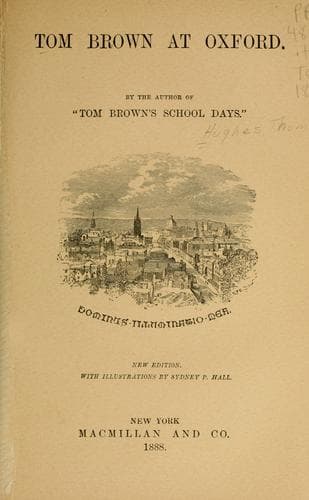
There were no dormitories and self-serve cafeterias as with
modern colleges, instead meals were served in a dining hall by
scouts, and each student gets what are called "rooms", consisting
of a bedroom and a sitting room for study and entertaining.
"Scouts" are a kind of servant attached to one student or a small
number of students. They run errands, bring meals from the
kitchen, and take care of clothing. A bootblack called the
"boots" takes care of footwear. A charwoman called the "char"
cleaned the rooms.
If a student wished to study without interruption, he would close
the oak door to his rooms, which was called "sporting his oak",
the signal not to disturb.
The term "the eleven" refers to the cricket team, and "prize-men"
refers to students who win prizes for scholarship. "Hunting
Pinks" are red riding jackets, and "hunters" are horses
especially suited to steeplechase or fox hunting type riding.
The Boating Club and Boat Racing is the popular sport of crew
rowing or sculling, where each college appoints a crew of eight
strong scull pullers or oarsmen and one small coxswain or
steersman to pilot a long narrow boat called a skiff or shell.
The coxswain calls the strokes and is generally the coach and
commander of the crew. Unlike in a canoe, the pullers face
backwards, and the one nearest the coxswain is called the "stroke
oar", because all the other oars watch him and match his stroke.
The racing takes place on the river which runs through Oxford,
and since because of the oars the river is too narrow for normal
passing as in most other kinds of racing, the race is sometimes
with just two boats, one ahead of the other. If the prow of the
second boat touches the stern of the first boat, the second boat
is considered the winner and advances in ranking. If the first
boat rows the length of the course without being bumped, it is
considered the winner and maintains its ranking. Sometimes the
winning crewmen put their little coxswain in the boat and parade
him through the streets of the town. At the end of the season the
honor of "Head of the River" belongs to the boat that has not
been defeated and is presumably the fastest, whereas the slowest
boat, Tail End Charlie, has been defeated by all the other
colleges. For another description of boating on the Thames in the
nineteenth century, see the humorous travel-log "Three Men in a
Boat, to Say Nothing of the Dog" by Jerome K. Jerome, written in
1889, which also mentions the dangers of the lasher at the
Sandford Lock.
Students were required to wear the traditional student's gown and
mortarboard cap to classes. Professors wore floppy caps and
similar gowns with indications of their rank on the sleeves,
Doctor, Master or Batchelor. This garb dates from the Middle
Ages, but is now only seen at Graduation Day and special
university occasions, and the gown has survived in some church
choirs. A professor was also called a don, and graduate
assistants were called fellows or servitors.
Public-domain text, read in full here on John Shaqi.
Reviews
Reviews
No reviews yet
Be the first to share your thoughts on this work.
Join the Discussion
Join the discussion
Sign in to leave a comment or review.
Sign InorCreate an account